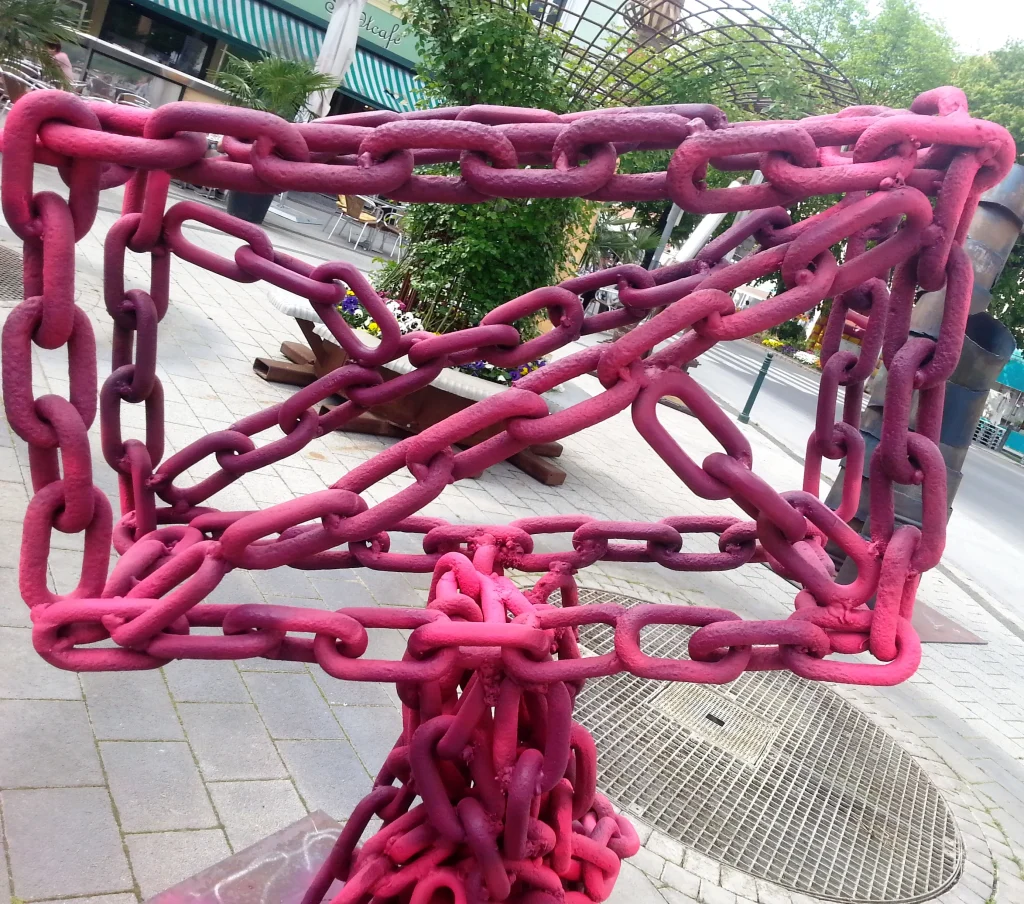
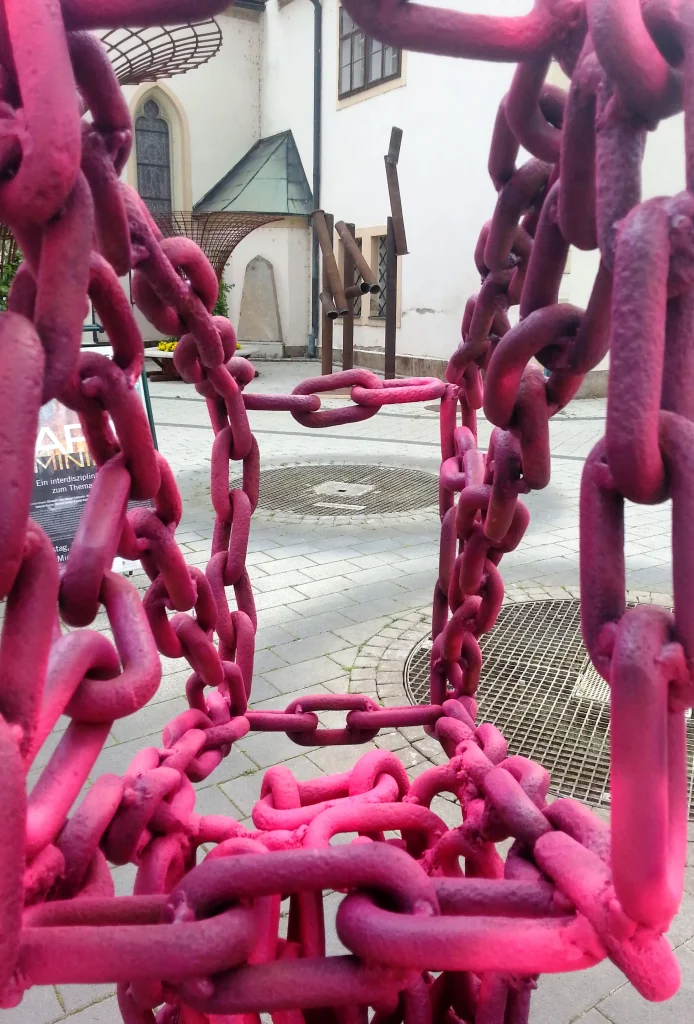
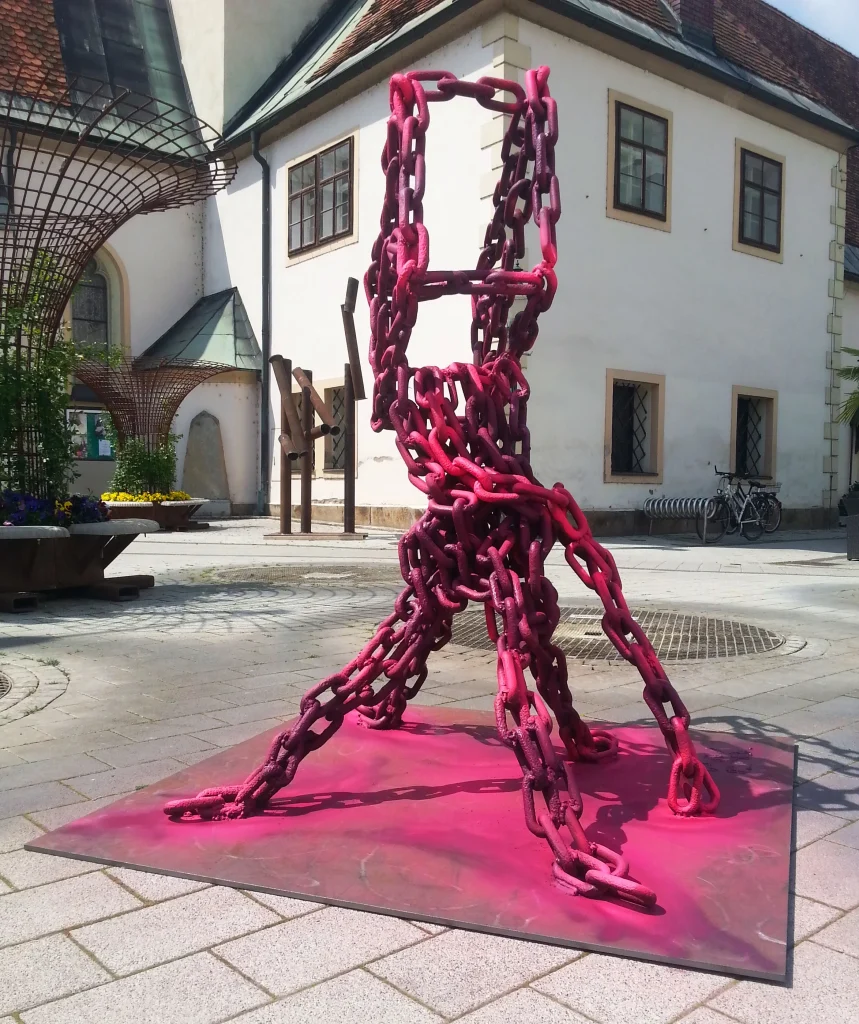
The chains used in the sculpture are rough and industrial, carrying a history of labor and burden. By shaping them into the form of a hammer, I wanted to reinterpret their power and energy. Rather than representing bondage, the hammer becomes a symbol of breaking free. The vibrant pink color amplifies this message it stands in stark contrast to what one might expect from such a heavy, industrial material, giving the hammer a sense of lightness and positivity.
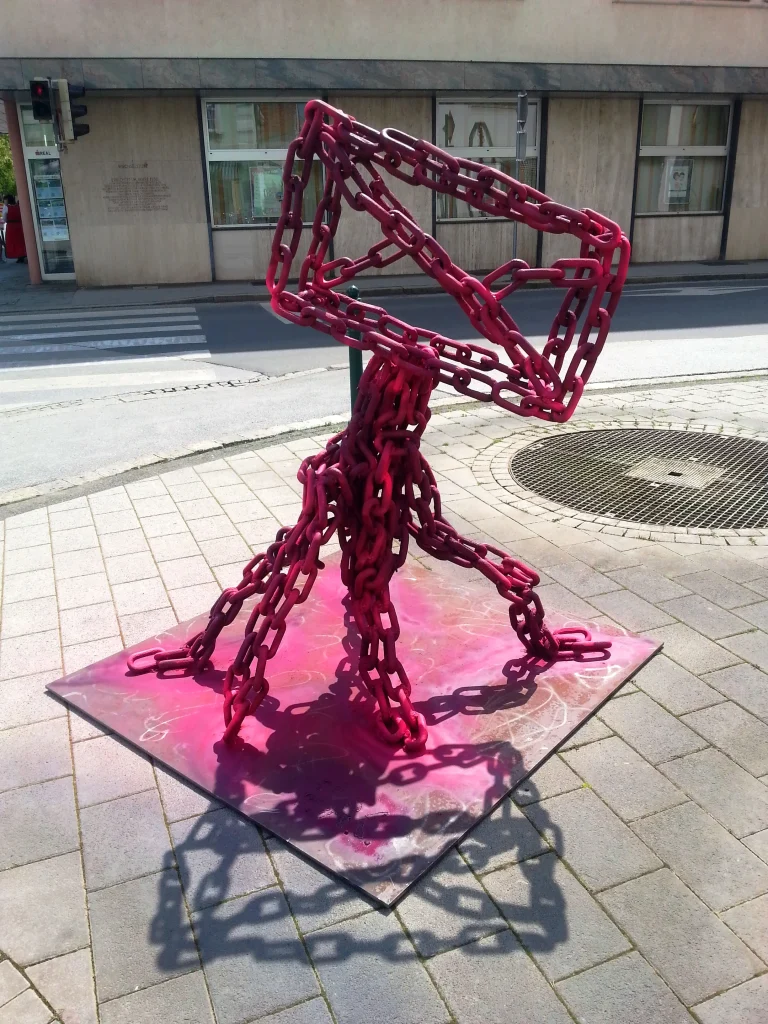

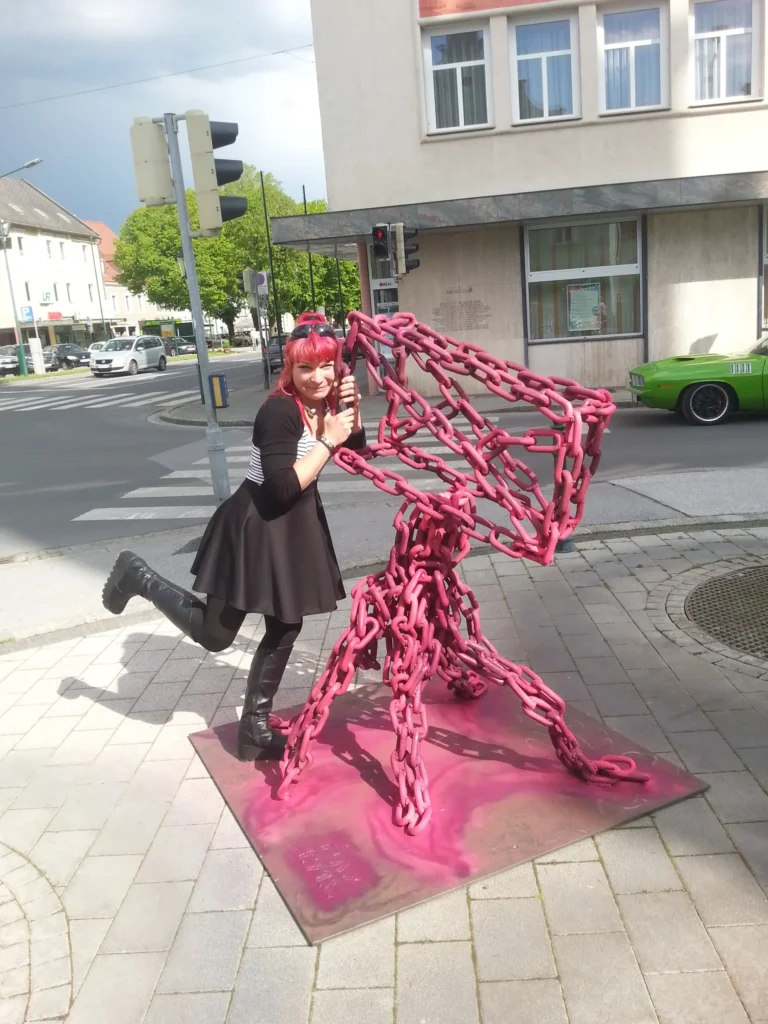
For me, this hammer symbolizes the possibility of breaking old structures and forging new paths. It represents strength, not just in the physical sense, but also the inner strength required to free oneself from personal chains. “Unchained” is therefore not just a tribute to the tool itself, but also a call to take control of one’s life and its challenges in order to create new freedoms. The hammer of Unchained is a message from Fronteacciaiocromato itself: We can take the things that seem to weigh us down history, industrialization, societal expectations, and reshape them. We can liberate ourselves not by discarding our past, but by forging a new future from its raw materials. This transformation is at the core of my work and the mission of the collective: to find freedom through the reshaping of what seems unyielding, and to celebrate the power of resilience and reinvention.
With Unchained, I aim to convey that each of us possesses the tools sometimes unexpected ones to liberate ourselves. Like the artists of Fronteacciaiocromato, we can work with the constraints we are given and transform them into symbols of possibility.SK



Voices:
Earlier in the spring, artists gathered in Zangtal to inspect materials metal parts from mining that have since been transformed into sculptures. “What makes this symposium special is that you have to work for your materials, using old objects that carry their own stories,” highlights Stefanie Krome, from the artist group Fronteacciaiocromato. Living in Carrara, Italy, she usually works with stone.
“Each sculpture has a connection to mining,” says Elisabeth Ledersberger-Lehoczky, the project’s artistic director, who was also responsible for assembling the group of artists. “They have to be skilled, be absolute professionals, and have experience with the material,” she lists as essential criteria. The ability to work within a time limit was another factor. And the third, crucial point was the willingness to engage with the local environment, the people, and with each other. “That worked very well here. It’s rare to see artists appreciate each other’s work like this,” she adds.
The artistic director also wants to emphasize the outstanding conditions: “The community provided the necessary resources, and we found an ideal location at the Voitsberg building yard. Everything we needed was available, and the staff didn’t see us as ‘intruders’ but supported us.”
Voitsberg 2016