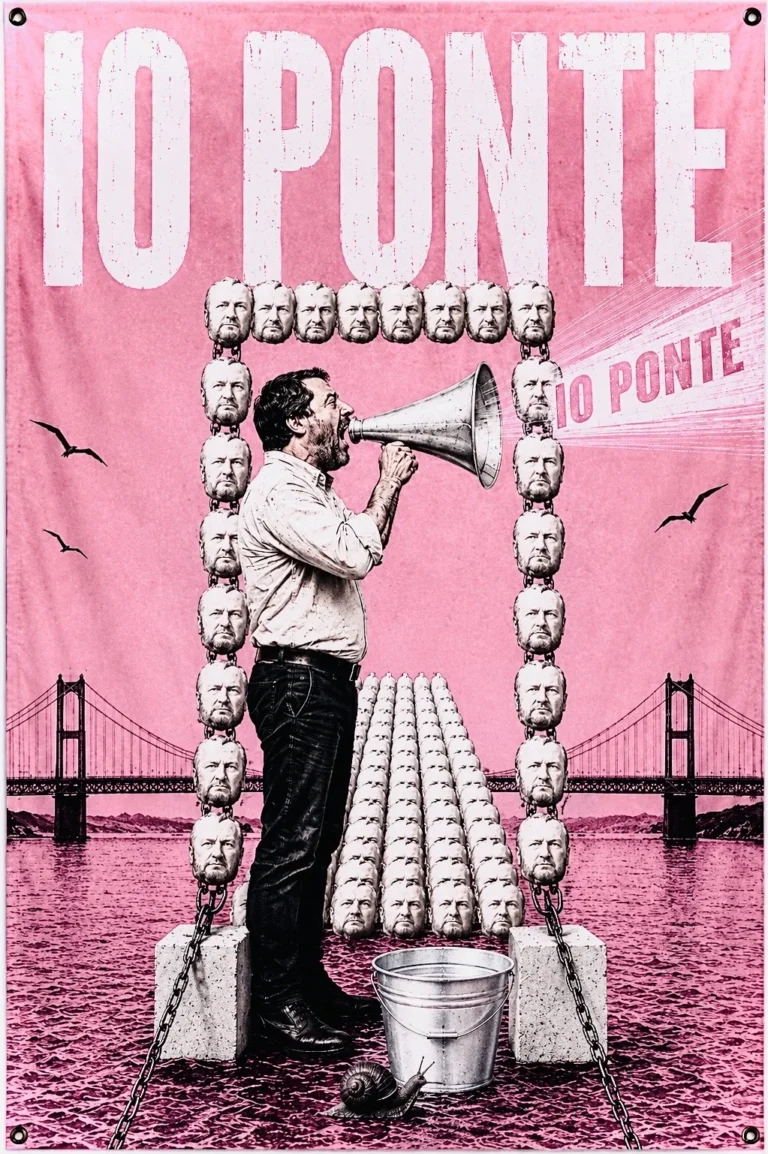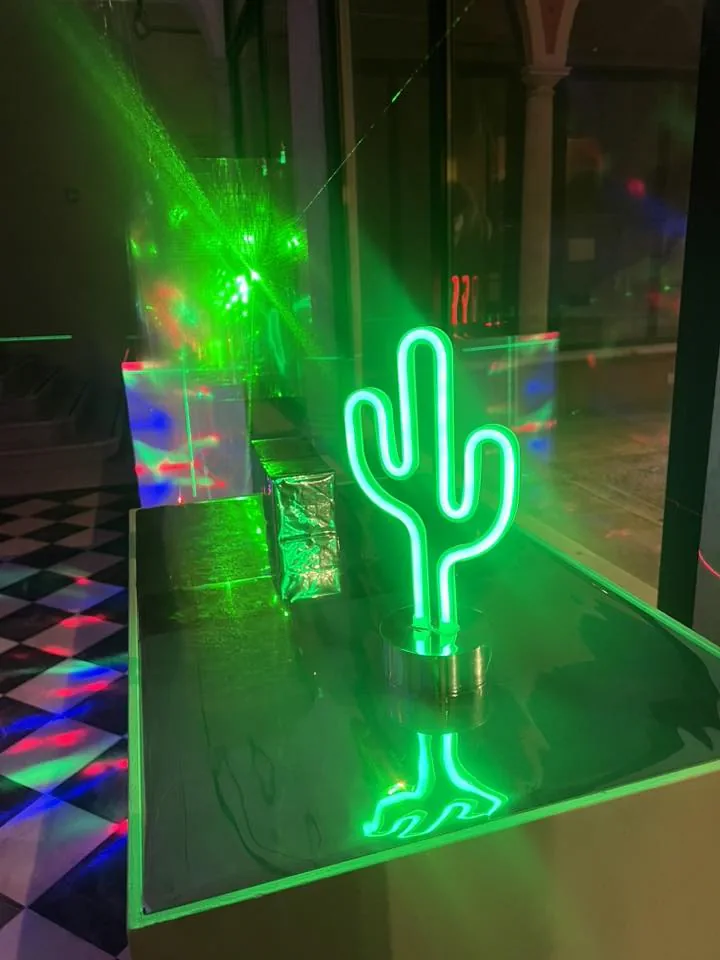
The more closely we followed the public communication surrounding the project, the stronger our impression became that the actual bridge was no longer made of steel and concrete. Instead, it seemed to be constructed from television appearances, press conferences, election campaign events, social media posts and political promises. The bridge already existed long before it was built. It existed as an image. It existed as a narrative. It existed as political property. And above all, it existed embodied by Matteo Salvini.
It was precisely at this point that IoPonte was born.
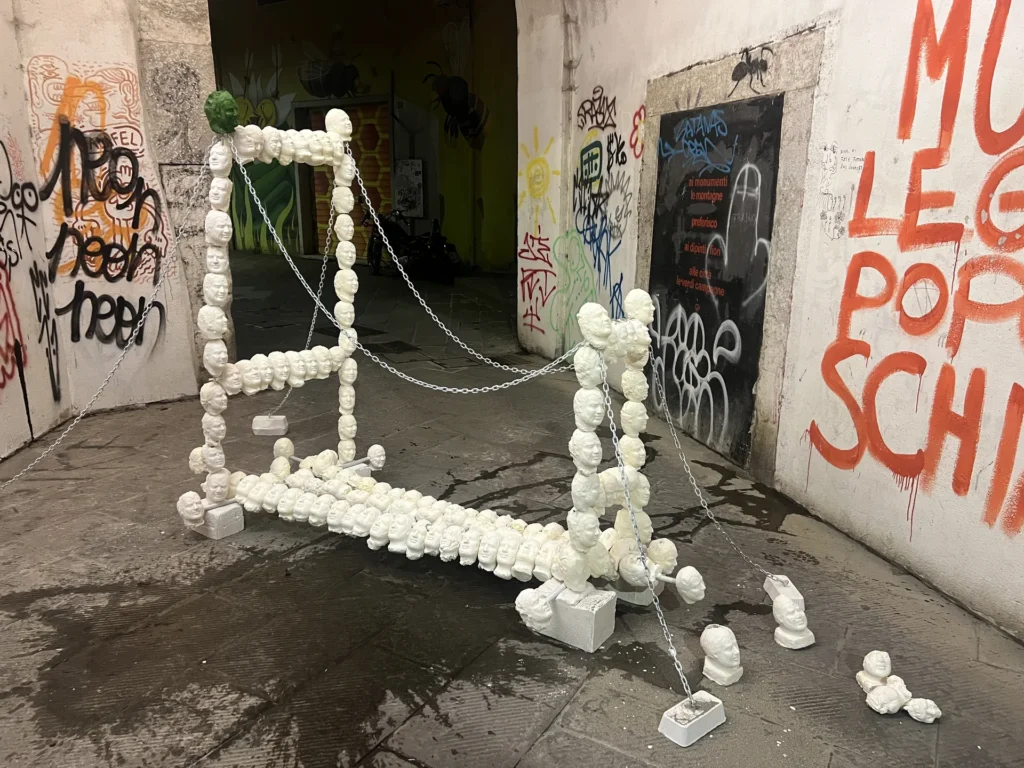
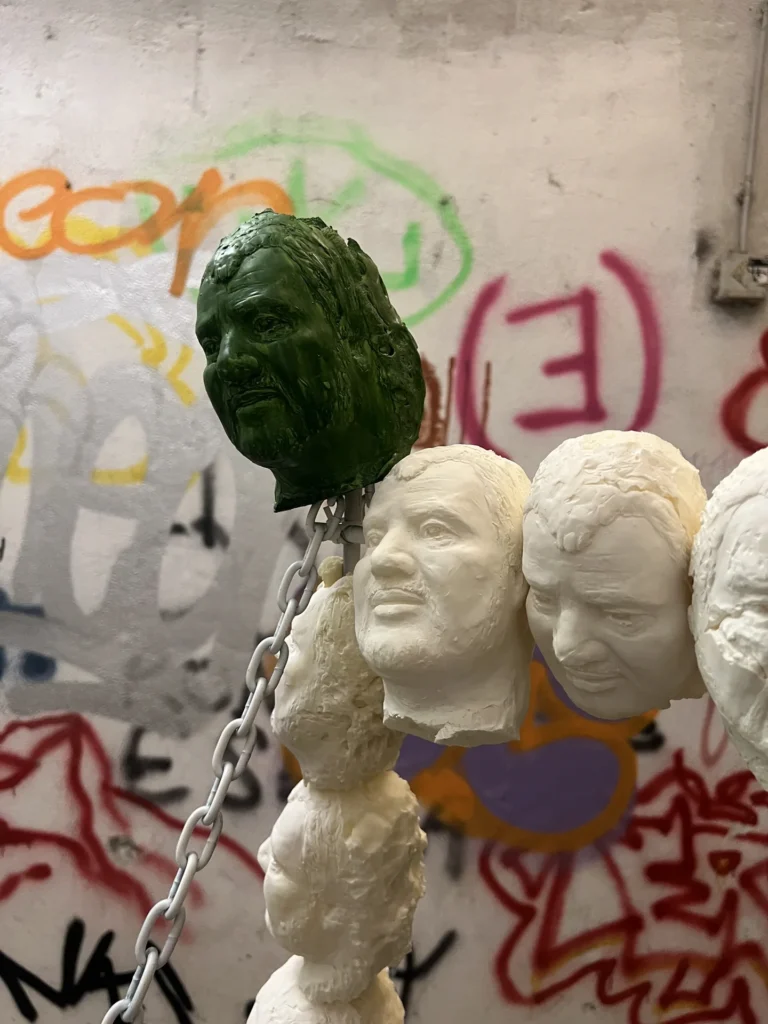
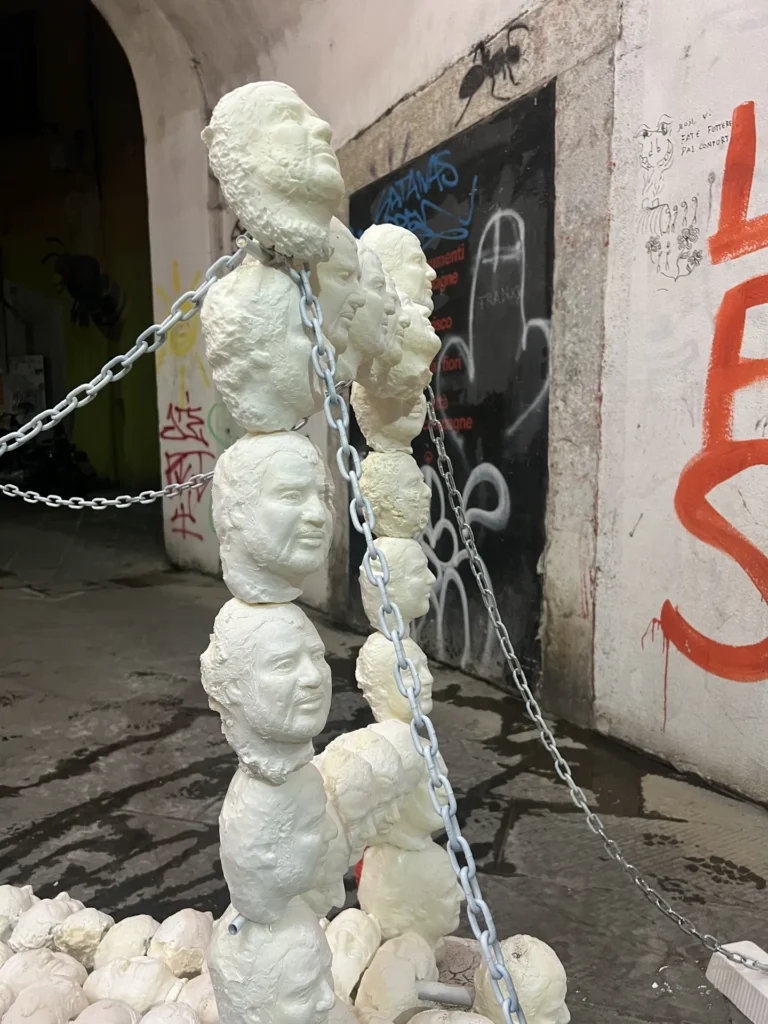
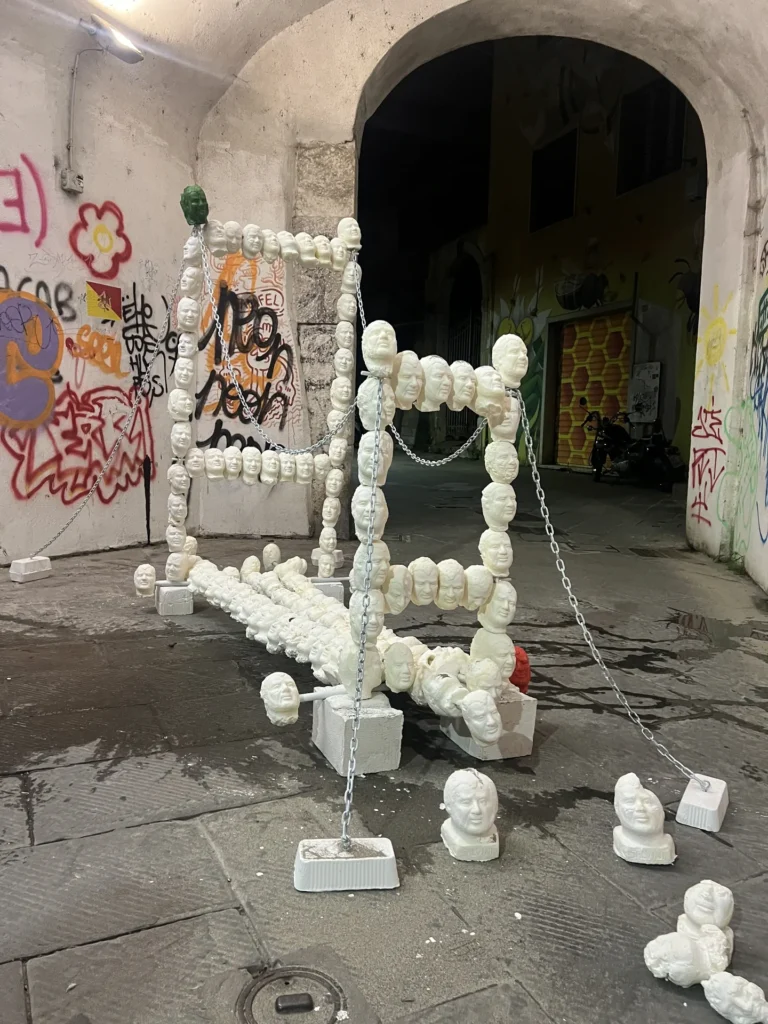
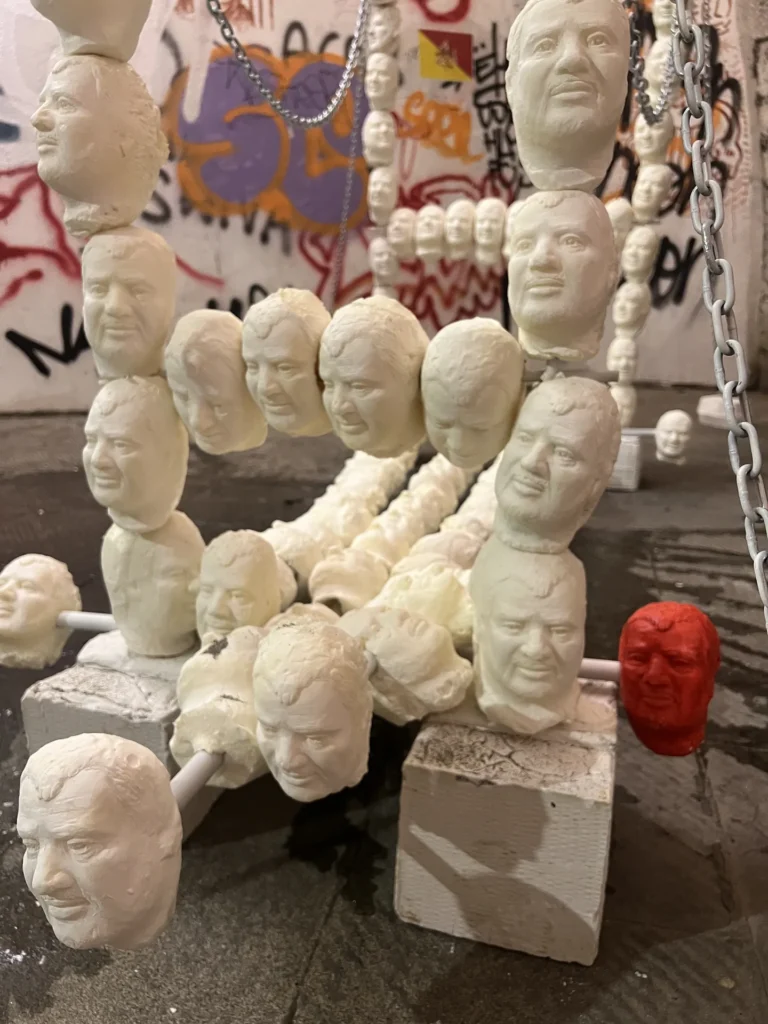
The work was originally developed as a pop-up installation and presented at the Butin8 ART Open Space Gallery. The exhibition space was not chosen by chance. The long passageway already functioned as a spatial metaphor for a connection between two points. Italy meets Sicily. As selected visitors passed through the tunnel, they simultaneously moved through a web of suburban mainstream culture, tags, graffiti and political claims that reinforced, contradicted and commented on one another.
Once the basic concept had been established, we began asking ourselves a question that accompanies many of our works: how do you represent a political mechanism without merely creating an illustration of it?
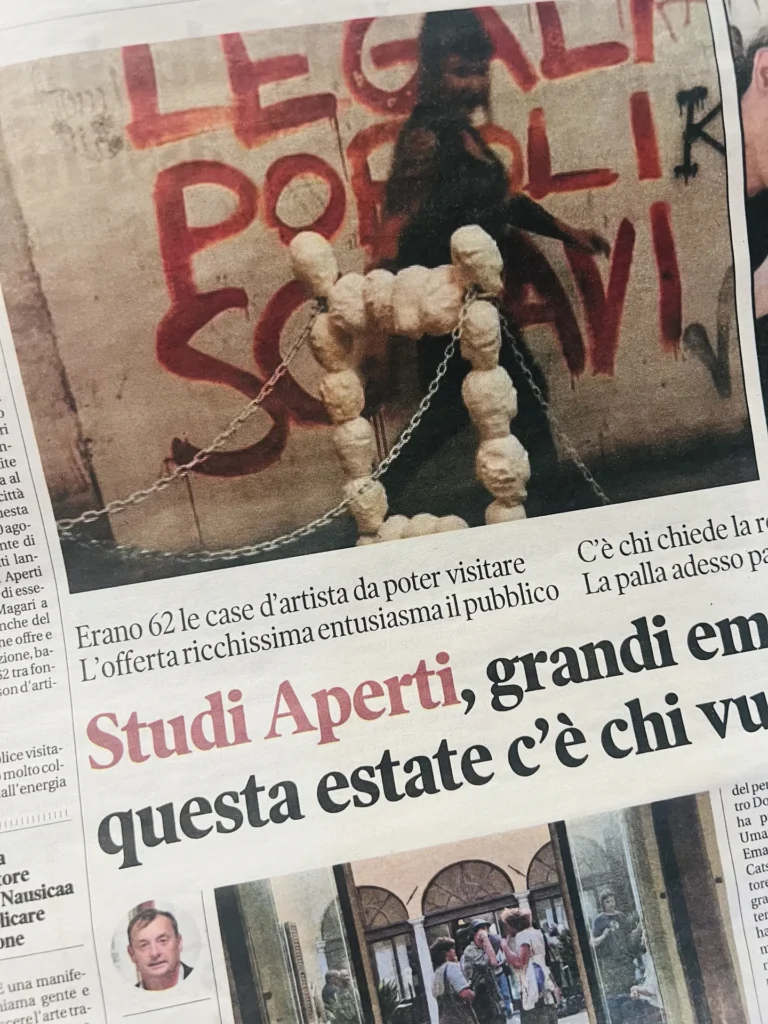
We had no desire to produce yet another political poster. The internet is already full of them. Every day, millions of opinions, comments, outrages and counter-outrages are published there. Within a few hours they are forgotten and replaced by the next wave.
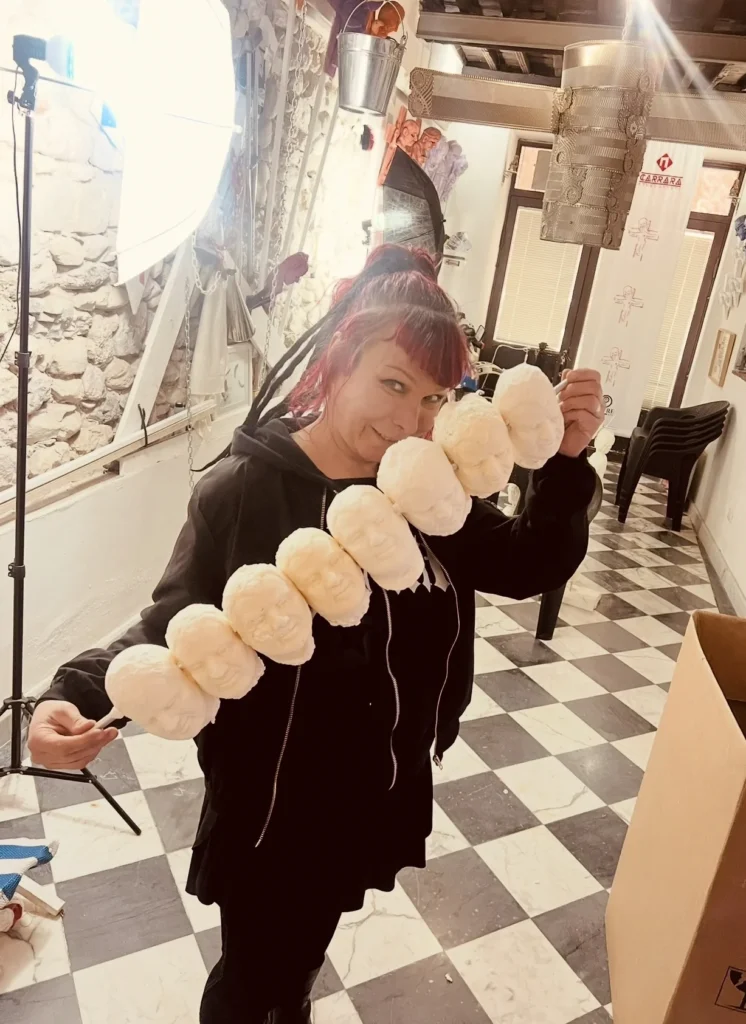
We were interested in something more lasting.
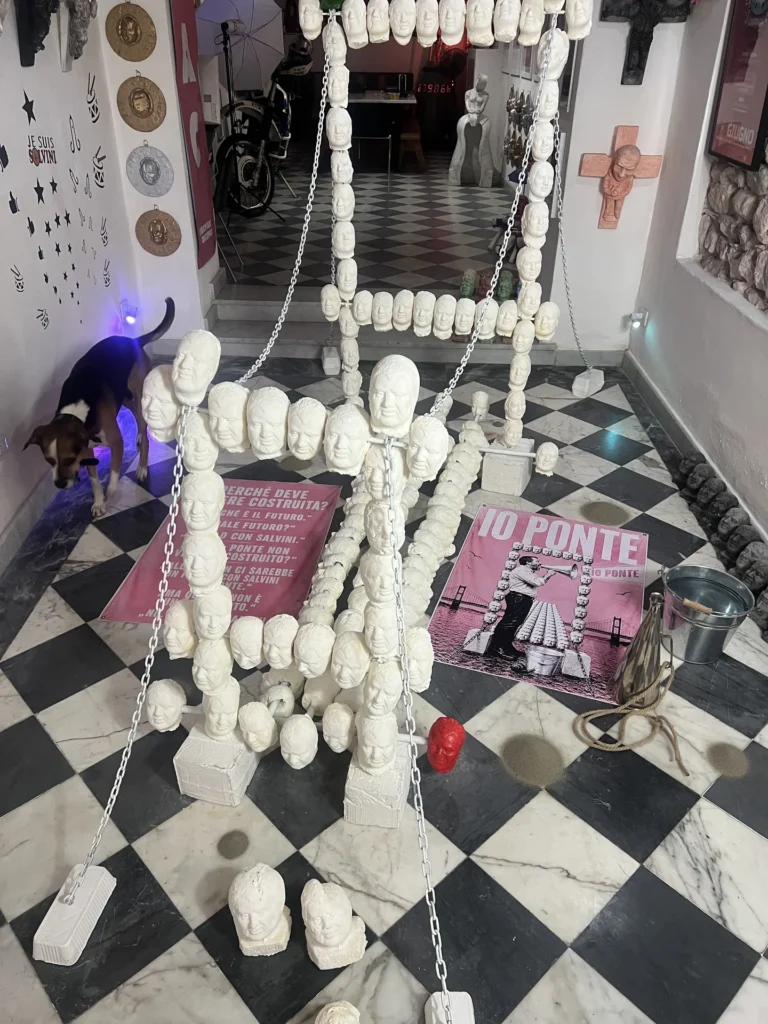
We wanted to make visible how political images function and why certain figures seem capable of surviving any discussion. No matter what happens, no matter which topic dominates the headlines, some individuals always manage to place themselves at the center of the narrative. This is not a question of ideology. It is a question of attention.
That is precisely why we decided not to portray Salvini as a politician, but as material. This may initially seem disrespectful, but it was exactly our intention.
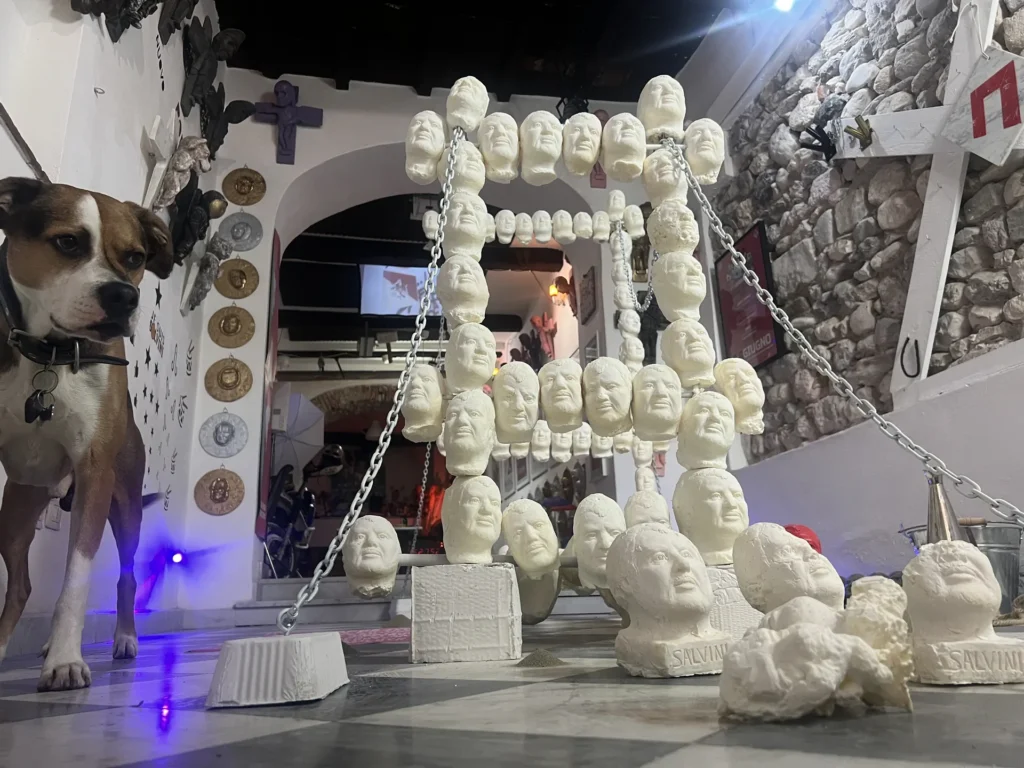
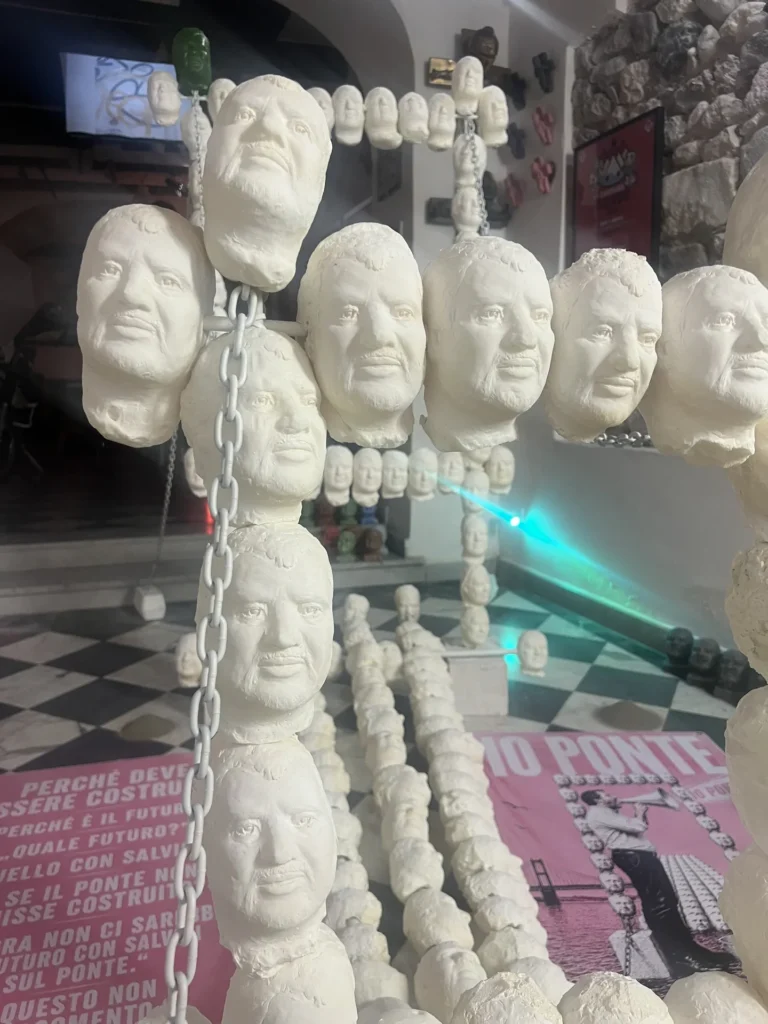
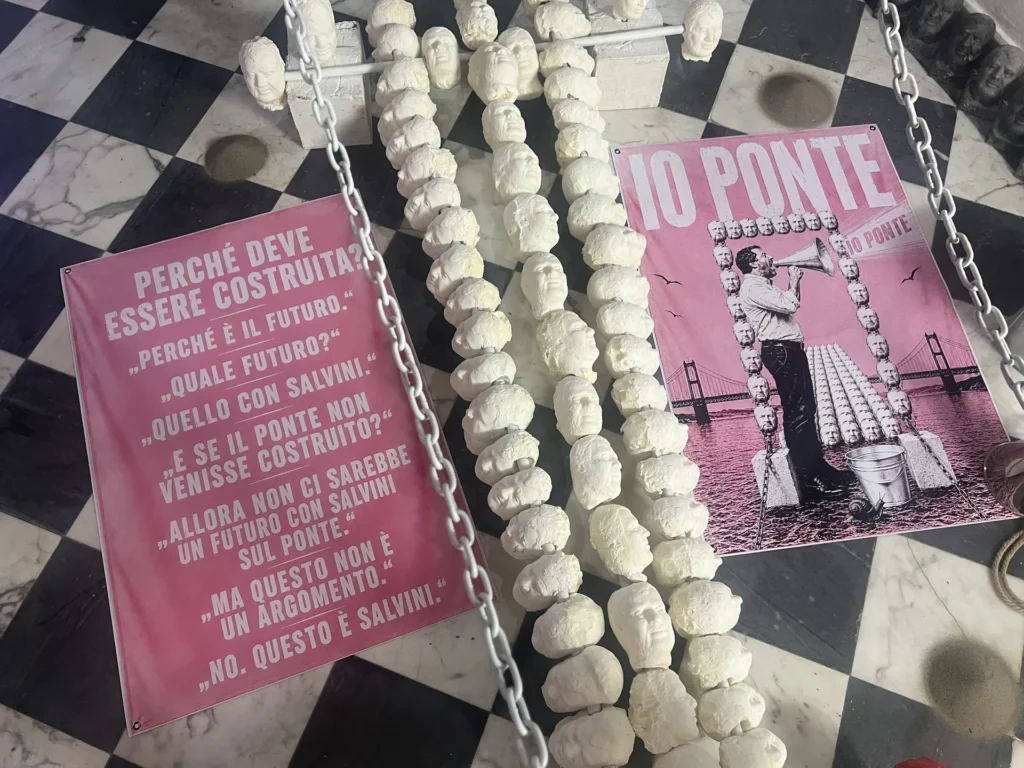
Politicians have been using images, symbols and emotions as material for decades. Why should art not do the same?
In our banners, Salvini therefore becomes part of a construction. He does not appear as a human being with individual characteristics, but as a building block within a system. His faces become pillars, supporting elements, components of an architecture that would collapse without constant visibility. His very own bridge to the bella terra!
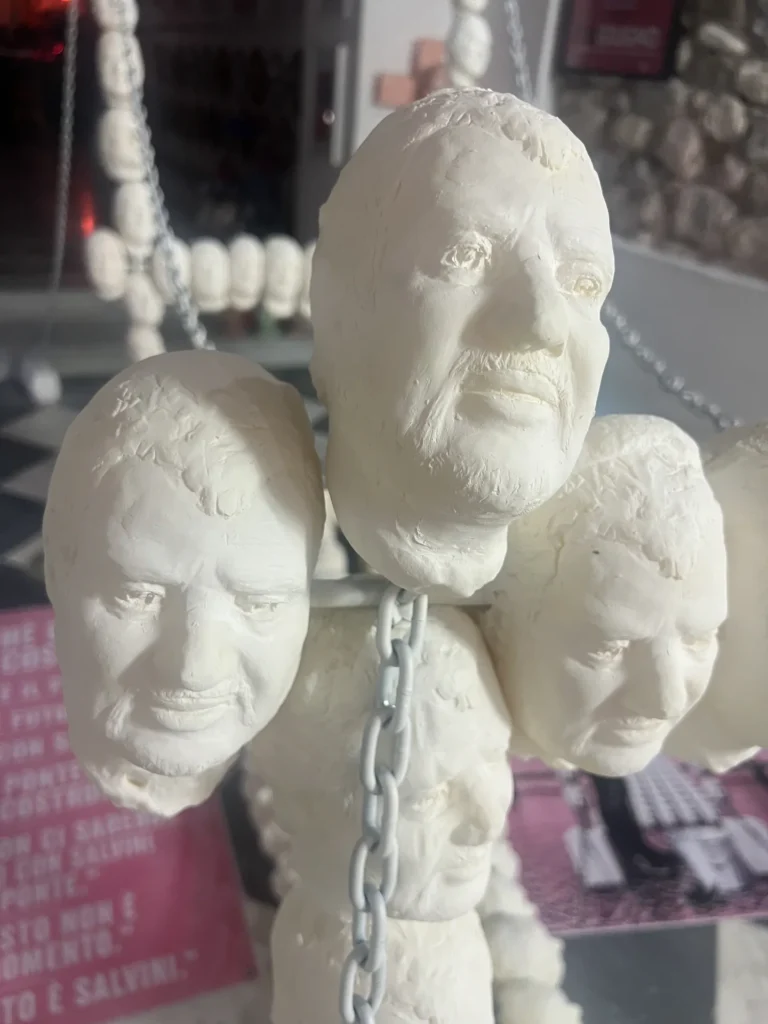
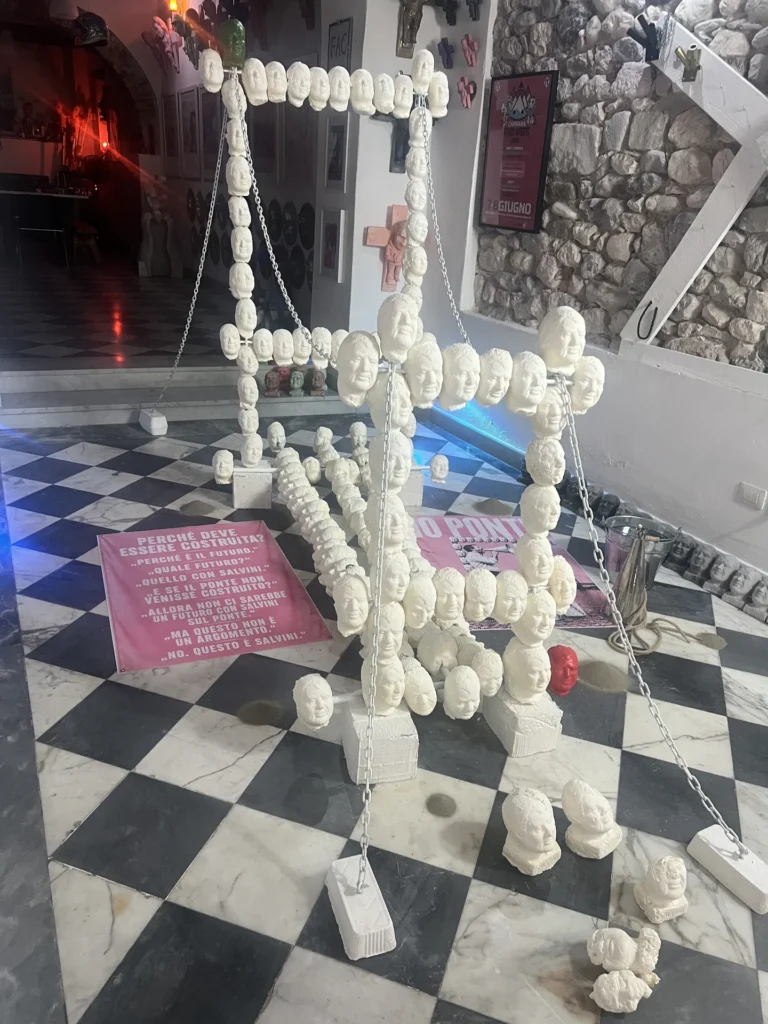
While working on the designs, we repeatedly found ourselves laughing. Not because the subject itself was amusing, but because reality had already done a large part of the work for us. Sometimes it is enough to push political communication just a little further in order to arrive in the territory of satire.
Many populist strategies ultimately function in a surprisingly simple way. A complex problem is reduced to a short sentence. A social conflict is concentrated into a single figure. A discussion is transformed into a question of identity. And anyone who disagrees is treated not as a conversation partner, but as an opponent.
It is precisely at this point that our interest begins.
Because, for us, art does not have to explain how the world works. Art may reveal how absurd the world has already become.
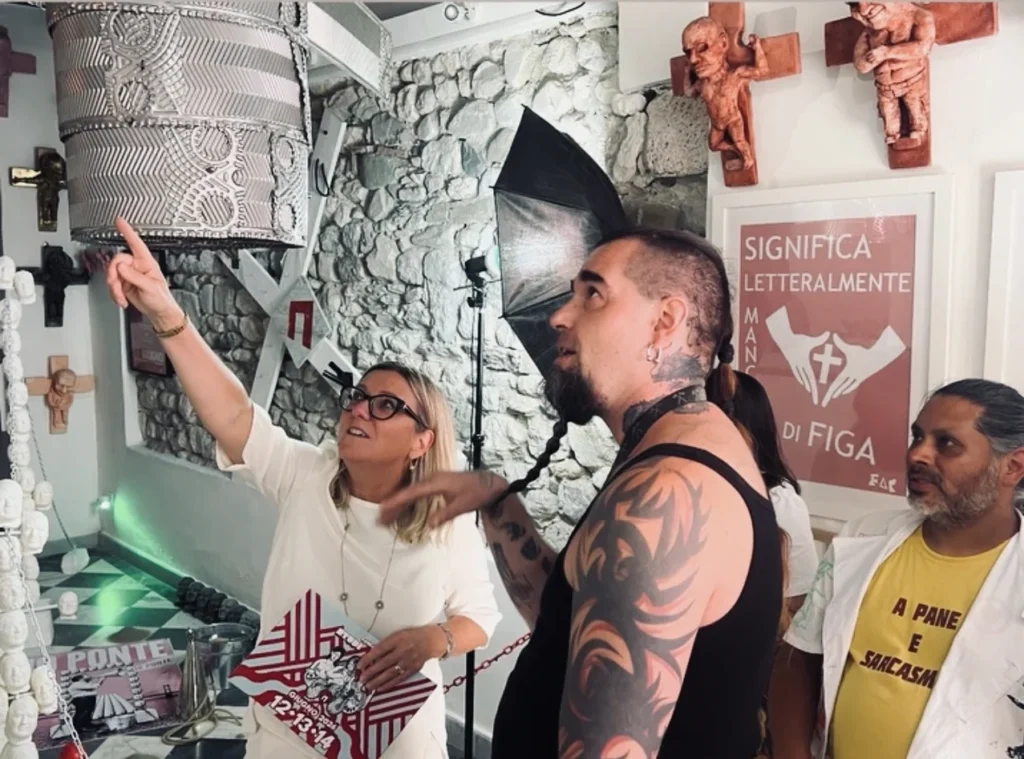
Perhaps this is also where the connection lies to many earlier works by Fronte Acciaio Cromato. For years we have been dealing with political symbols, media staging, religious substitute rituals and modern forms of belief. In the past, other figures stood at the center. This time it was Salvini. Tomorrow it will be someone else.
The mechanisms always remain the same.
People always want simple answers.
People always want heroes.
People do not want stories that are too complicated.
And people want to believe rather than verify.
That is precisely why populist figures are interesting to artists. Not because they are extraordinary, but because they function like magnifying glasses. Through them, processes become visible that would normally remain hidden.
IoPonte is therefore not a work about a single politician.
IoPonte is a work about a system that produces such figures, rewards them and continuously reproduces them.
And perhaps this also explains why the work reaches far beyond the specific debate surrounding the bridge.
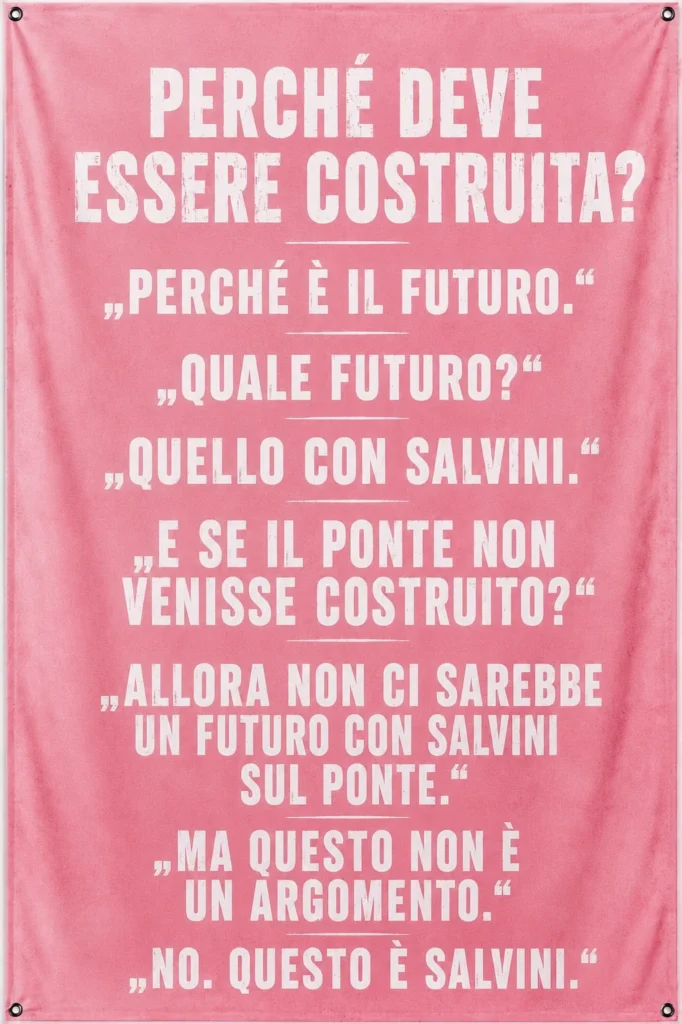
Names may change & Faces may change.
Parties may change.
The stage may change.
The mechanism remains the same.
And that is precisely why we consider it worthy of exhibition.
*Matteo Salvini is an Italian politician, populist and political turncoat.
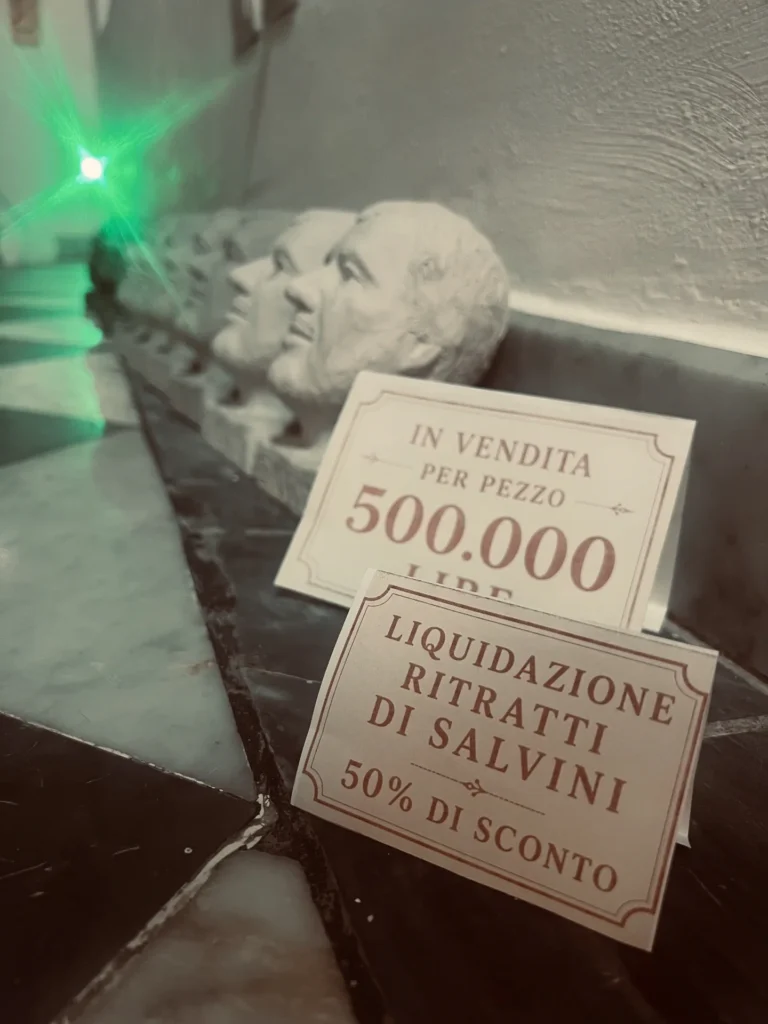
*Should you wish to present your honorable request, you are fully entitled to purchase a cast bust of Mr. Salvini from us.
*No Salvini heads were harmed during the production of this work. Mr. Spock is a good dog.
Carrara 2026