Our installation in Viareggio at studio21 embraces the provocative statement to shed new light on the tension between faith and rationality, between eternity and transience.
In this projection, symbolic images, the cross as an ancient symbol of faith, intertwine with the words of a philosopher who proclaimed the death of God. By using various languages and bold, neon-like colors, we challenge viewers to think beyond cultural and spiritual boundaries and confront the burning questions of human existence. The space in studio21 is raw, almost industrial, creating a deliberate contrast to the sacred content of our imagery. We don’t want to exhibit in sterile galleries or sacred halls but rather in spaces where life is palpable in all its hardness and authenticity. The installation in this workshop-like setting reflects our aim to free art from traditional contexts and bring it into the reality of everyday life.
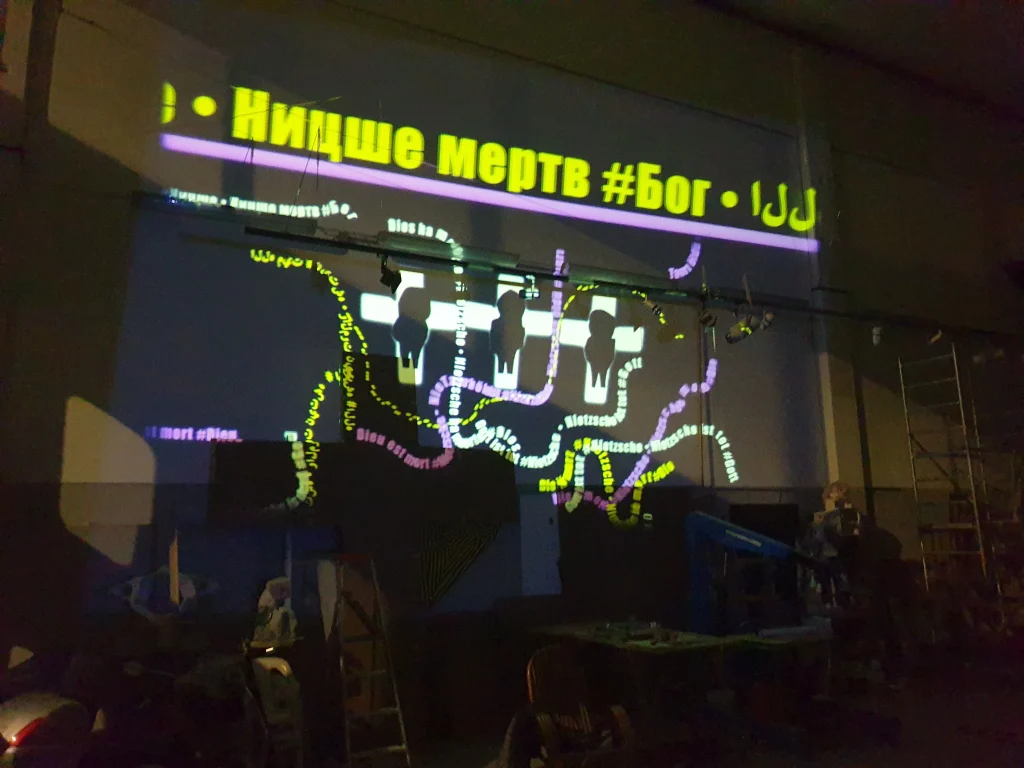

Fronteacciaiocromato is a call for reflection and a visual outcry for a new understanding of transcendence, without being constrained by dogmas or prescribed truths. Our art is not here to provide answers but to pose questions that sear into the consciousness of the viewer and a invitation to explore the uncomfortable. In this installation, Nietzsche’s proclamation of the “death of God” becomes a catalyst, a spark that ignites questions about the foundations of our modern identity.
Are we truly liberated in a world that has cast off traditional beliefs, or have we merely replaced one dogma with another? Through this fusion of philosophy and religious symbolism, we aim to expose these paradoxes and lay them bare for examination. Our use of beamed neon colors and sharp contrasts is no coincidence. It reflects the overwhelming sensory overload of the digital age, a world that constantly bombards us with information, opinions, and ideologies.
Fake news at well. Alot.
In such a world, the question of meaning becomes even more elusive and urgent. The flashing texts and symbols in different languages are a reminder of the cultural fragmentation we experience today, as well as the universal themes that connect us despite these differences. This is why we integrate multiple languages and symbols; they represent the global dialogue, or perhaps the global noise, that defines our existence.
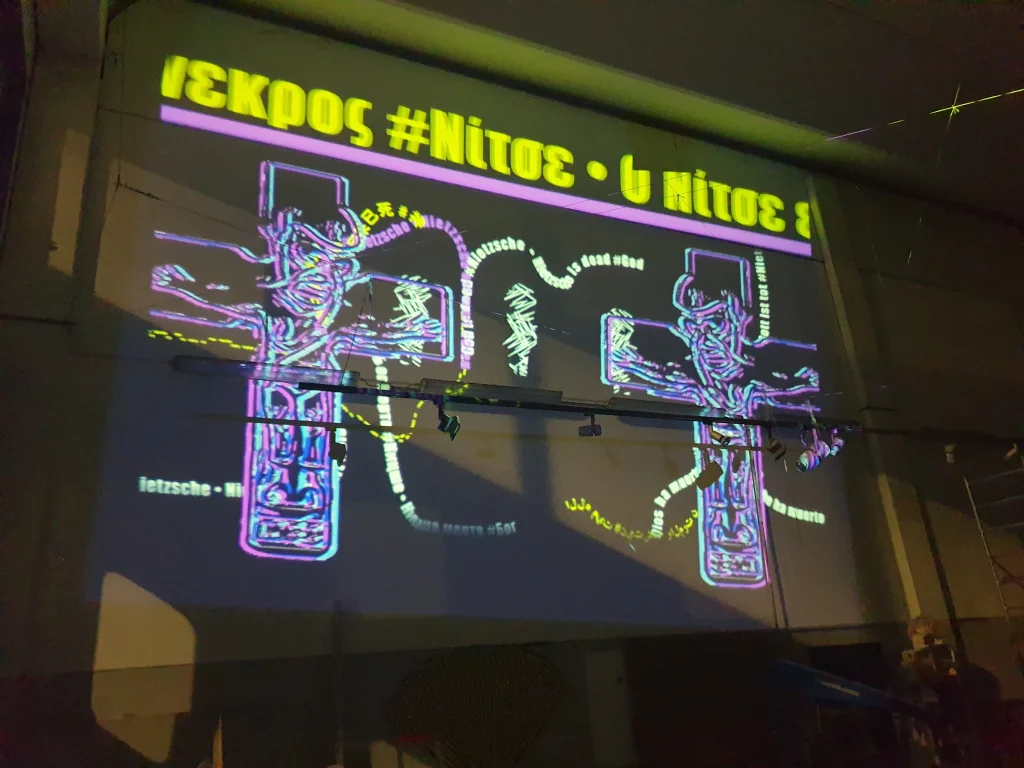
The choice of an industrial, almost harsh space for our projection is an integral part of our vision. We believe that art should not only provoke thought but also disrupt the environments we encounter in our daily lives. By projecting our work in this raw, utilitarian setting, we strip art of the pretensions of high culture and make our installation accessible, tangible, even confrontational. We want viewers to feel the tension between the sacred and the profane, the philosophical and the mundane, as if the very walls were challenging their beliefs.
Fronteacciaiocromato does not exist to offer comfort. Our collective exists to shake the foundations of what is taken for granted, to spark dialogue, and to push the boundaries of interpretation. We see ourselves as companions on a journey, not towards clear answers, but towards a deeper, perhaps unsettling, understanding of human existence. In a world that often seeks clarity and certainty, we embrace ambiguity, allowing each viewer to confront their own perspectives, biases, and beliefs.
This installation is both a homage and a critique, a reverence for the ancient questions of faith and a rebellion against the constraints of conventional answers. Nietzsche, the cross, the languages, the colors, all these elements are tools, not to preach, but to provoke. They are fragments of a mosaic that each viewer completes in their own mind. Fronteacciaiocromato invites you to stand before this chaotic tapestry, to let it challenge you, disturb you, and ultimately, to remind you of the boundless nature of questioning in the human spirit.
Viareggio 2020