It emerged from a deep engagement with the conflicts and dynamics that define justice in human society. The work serves as an invitation to viewers to reflect on power, morality, responsibility, and the inevitable transience of life.
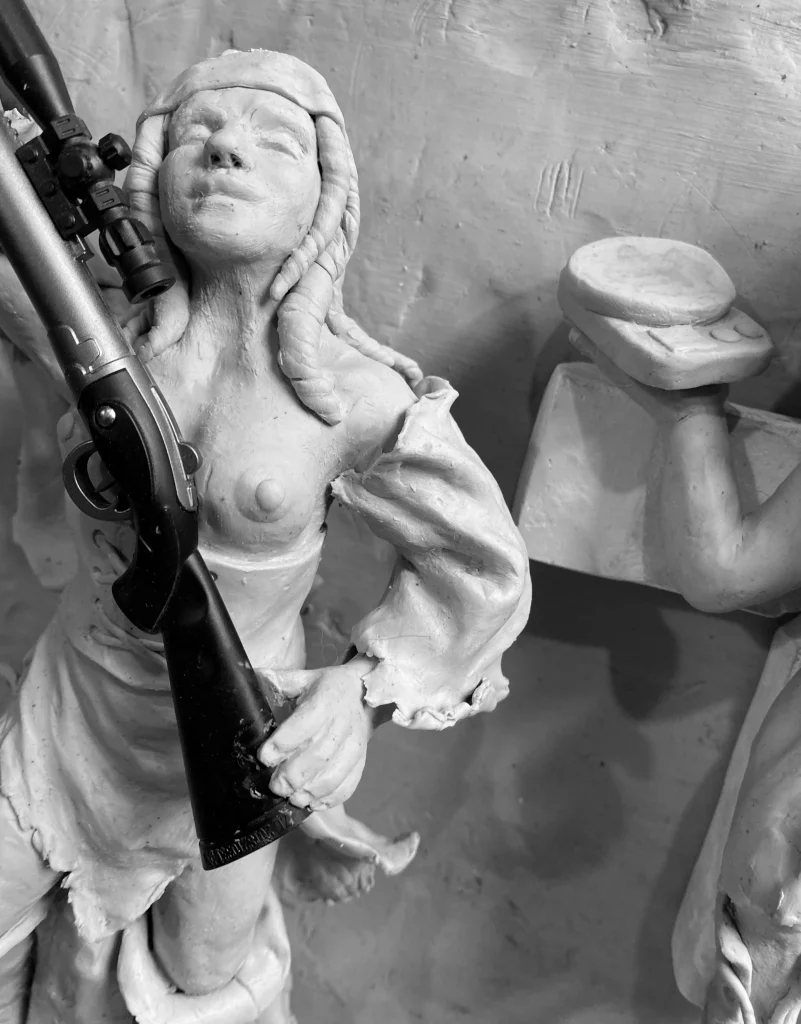
The first figure, armed with a rifle and a pen as its tip, embodies the ambivalence between creativity and destruction. The pipe replaces the rifle, shifting the focus from direct conflict and violence to contemplation and dialogue. The pipe, often associated with thoughtfulness, introspection, or even traditional craftsmanship, suggests a more meditative or peaceful approach to justice. The figure maintains a confident and assertive stance, with one hand on her hip and the other holding the pipe aloft. Her posture and expression exude strength and determination, but without the overtly combative edge of the rifle version.
It represents art as a weapon, a medium capable of both healing and confrontation. The pipe symbolizes creation and expression, while the rifle reflects potential violence and conflict, often the foundations for societal change. This figure is not a simple heroine but a symbol of creative resistance in a world riddled with injustices. Here, we aim to highlight the significance of art as a tool for enlightenment: art is not merely beautiful or decorative; it has the power to reveal profound truths and challenge societies. Yet, this power carries risks, as it can both destroy and build.
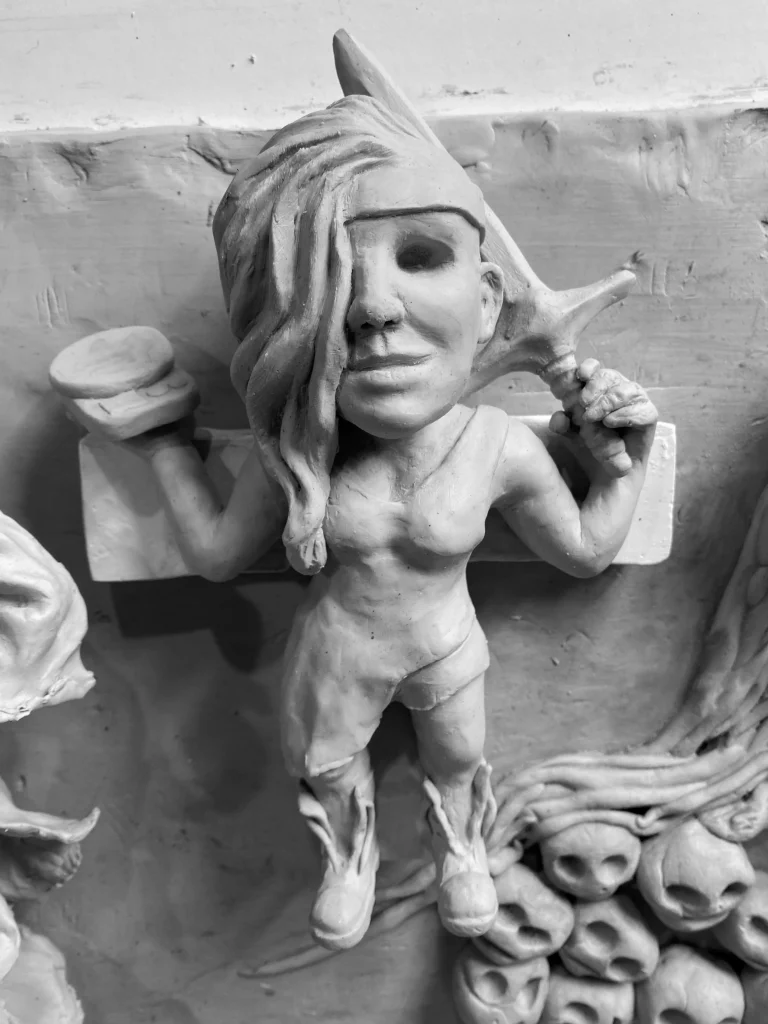
The central figure in the relief occupies the focal point, both physically and symbolically. It holds a scale in one hand, a traditional symbol of balance and judgment, and a dagger in the other, representing the harsh and often painful consequences of decisions. This figure is powerful yet not flawless; it reflects the challenges humanity faces in attempting to define and enact justice. Through this figure, we sought to convey the duality of justice. It is not perfect, nor omniscient, yet it remains the anchor upon which society relies. Its strong, heroic stance is intended to provoke questions about the importance of responsibility and judgment: Who decides what is just? And how often does justice demand sacrifices?
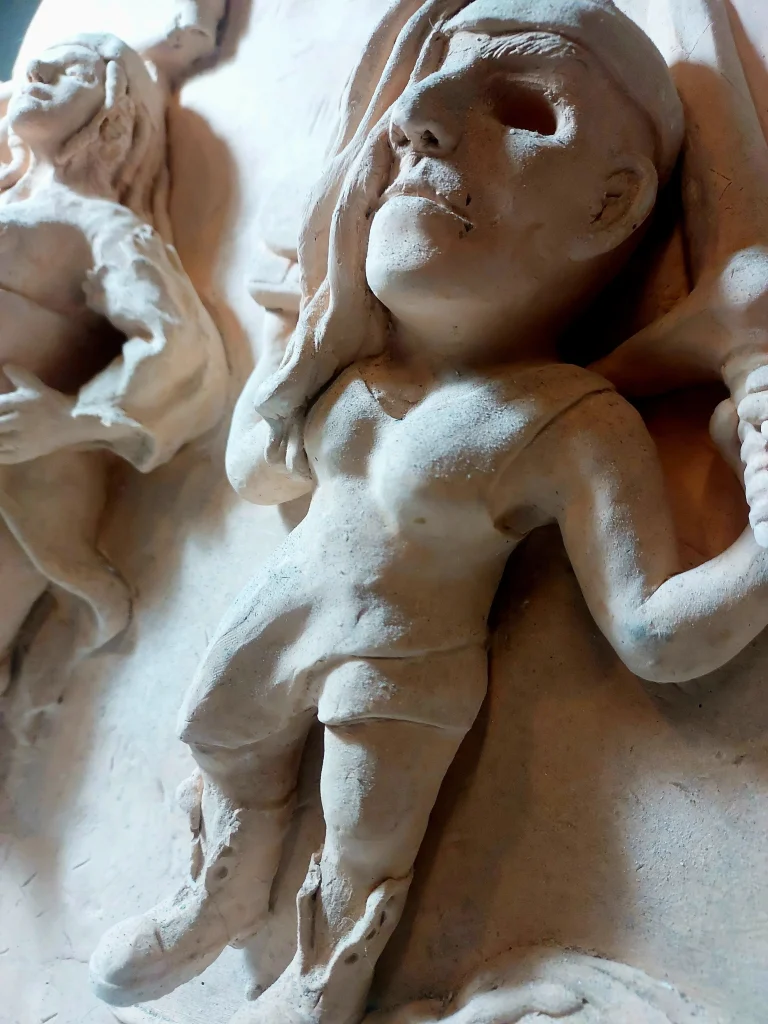

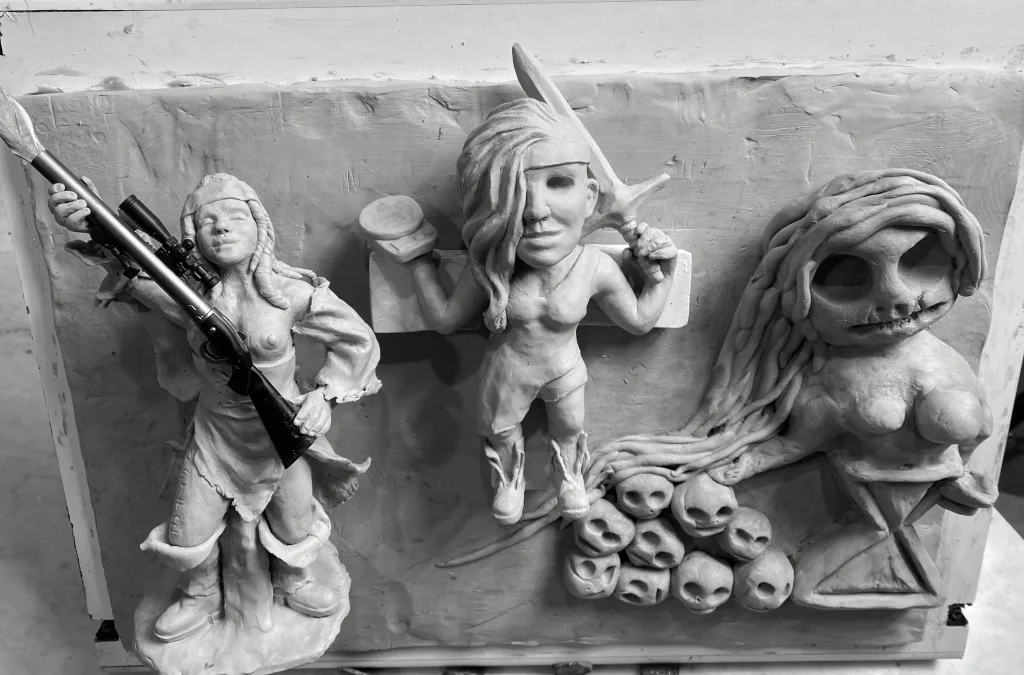
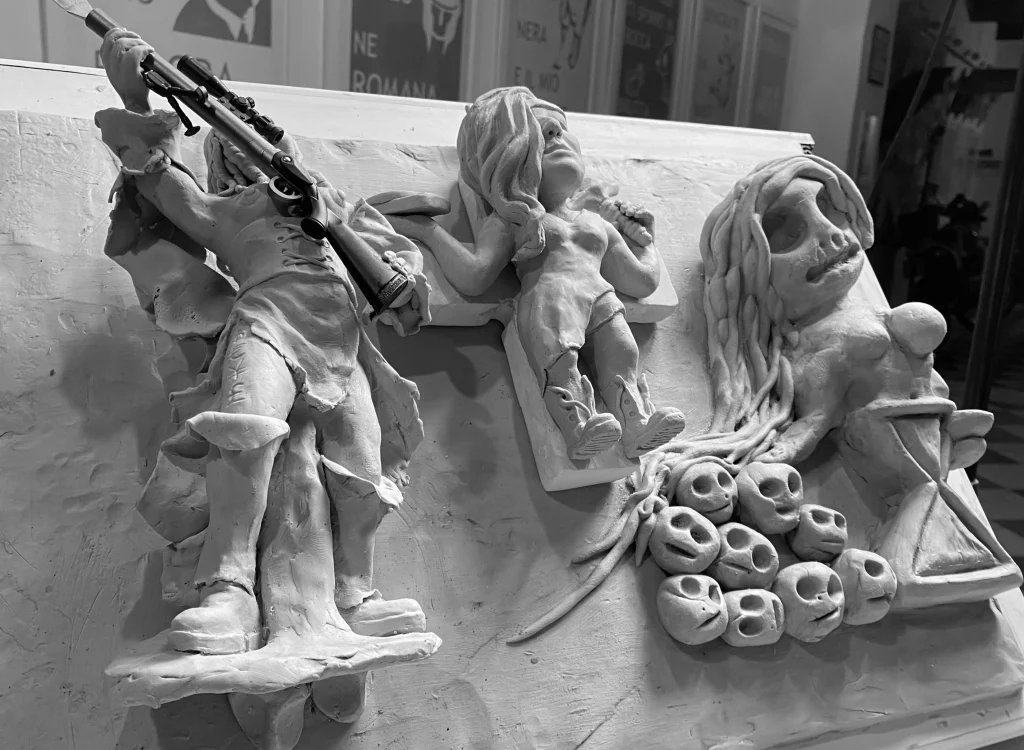
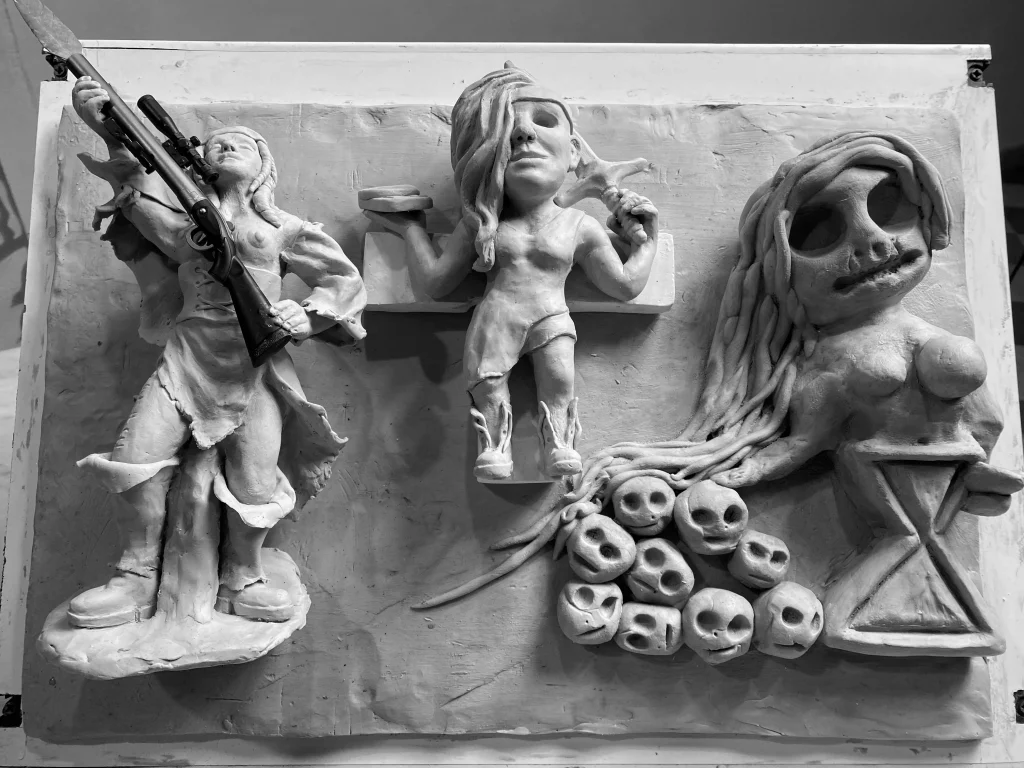

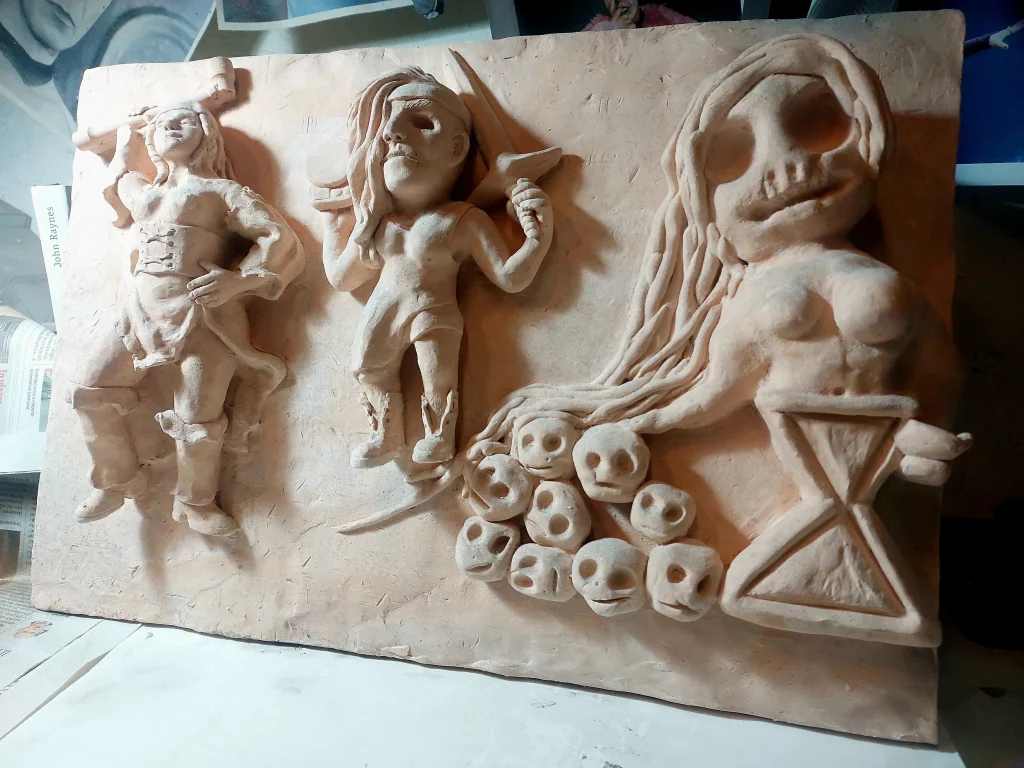
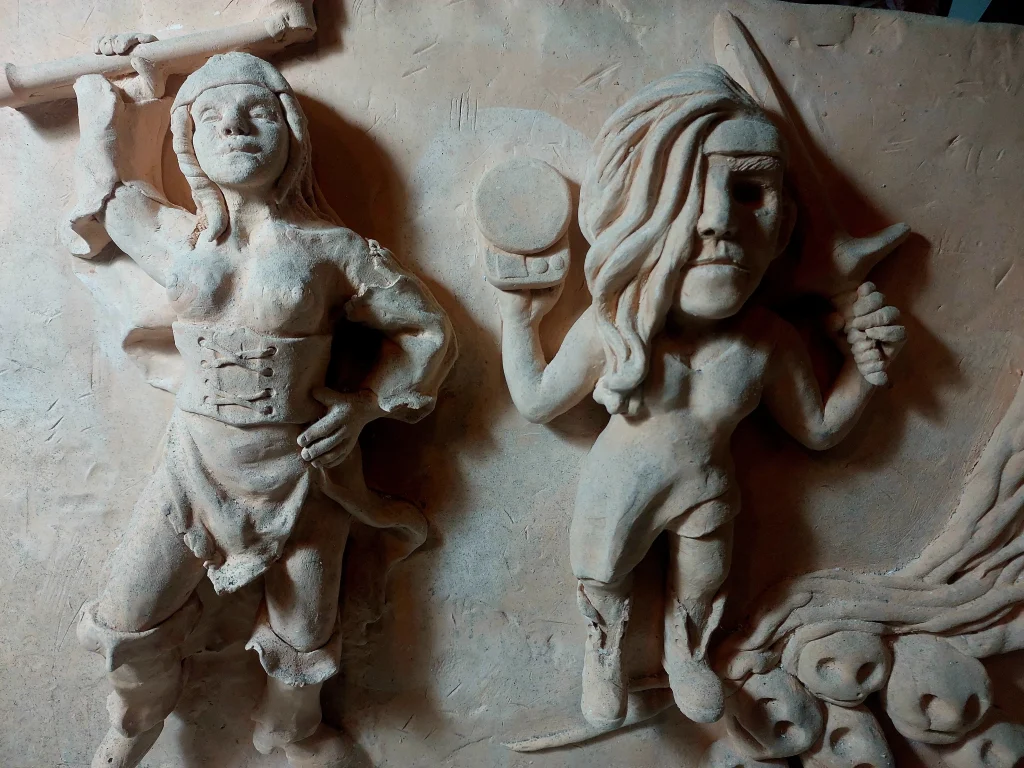
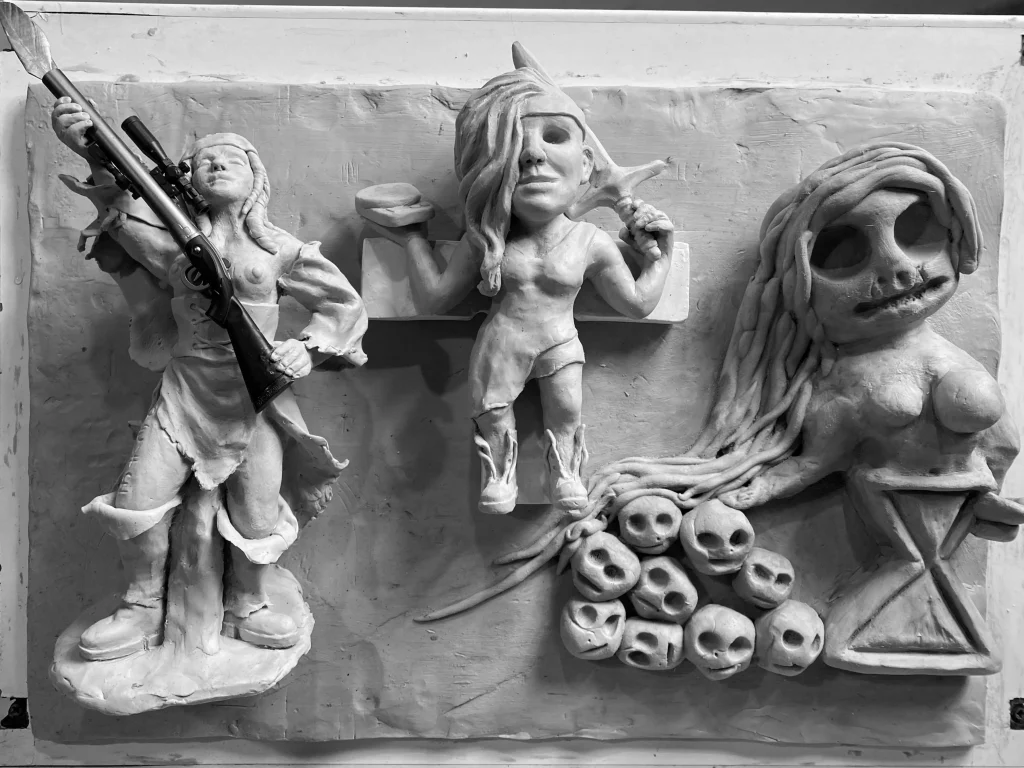
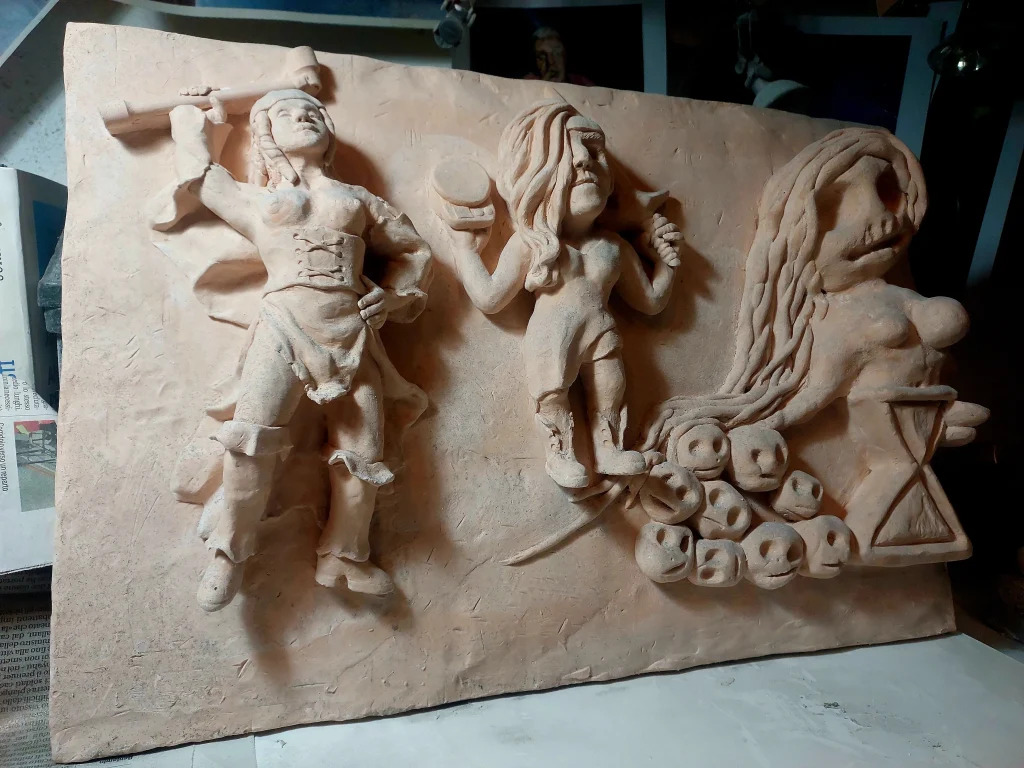
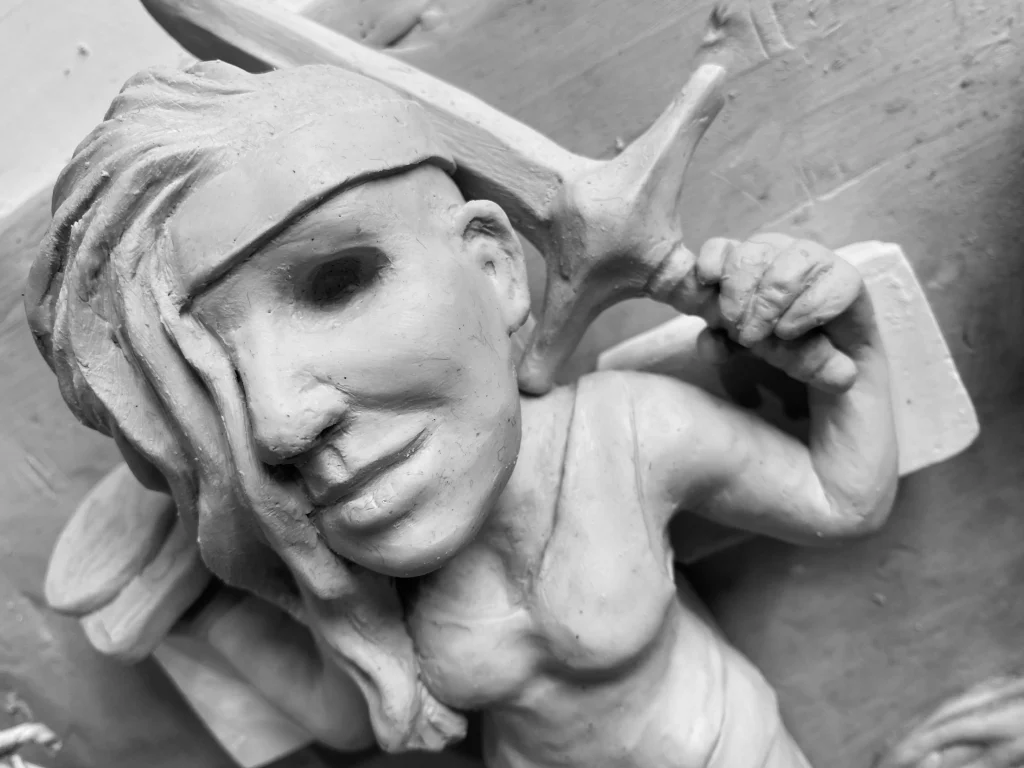
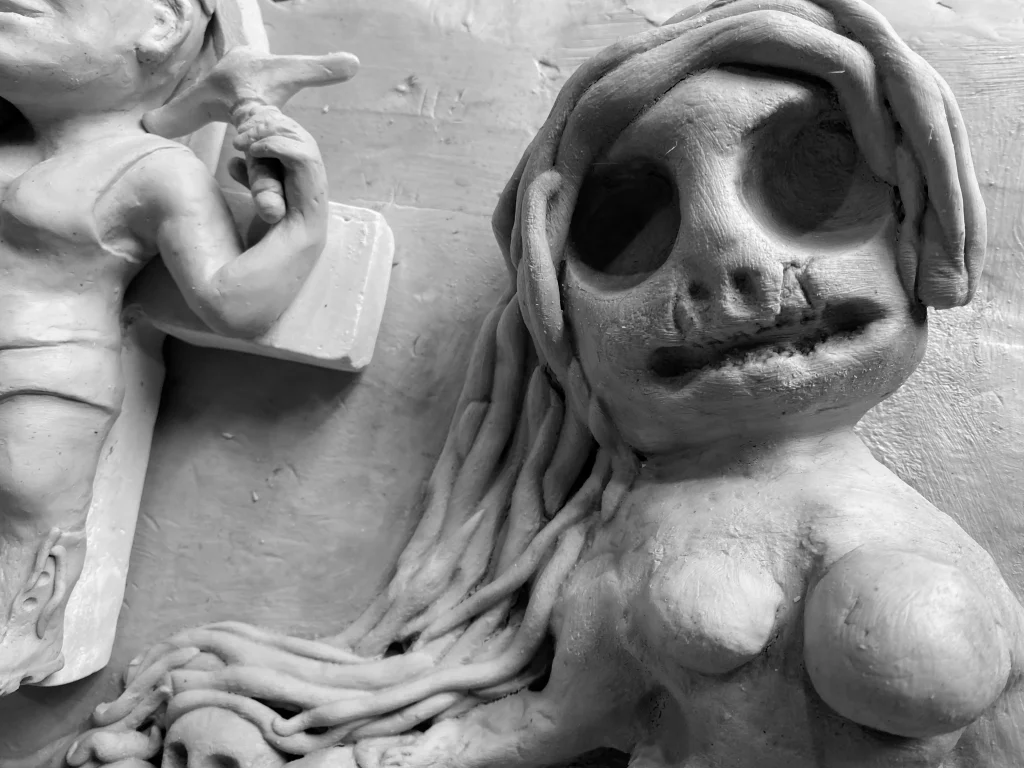
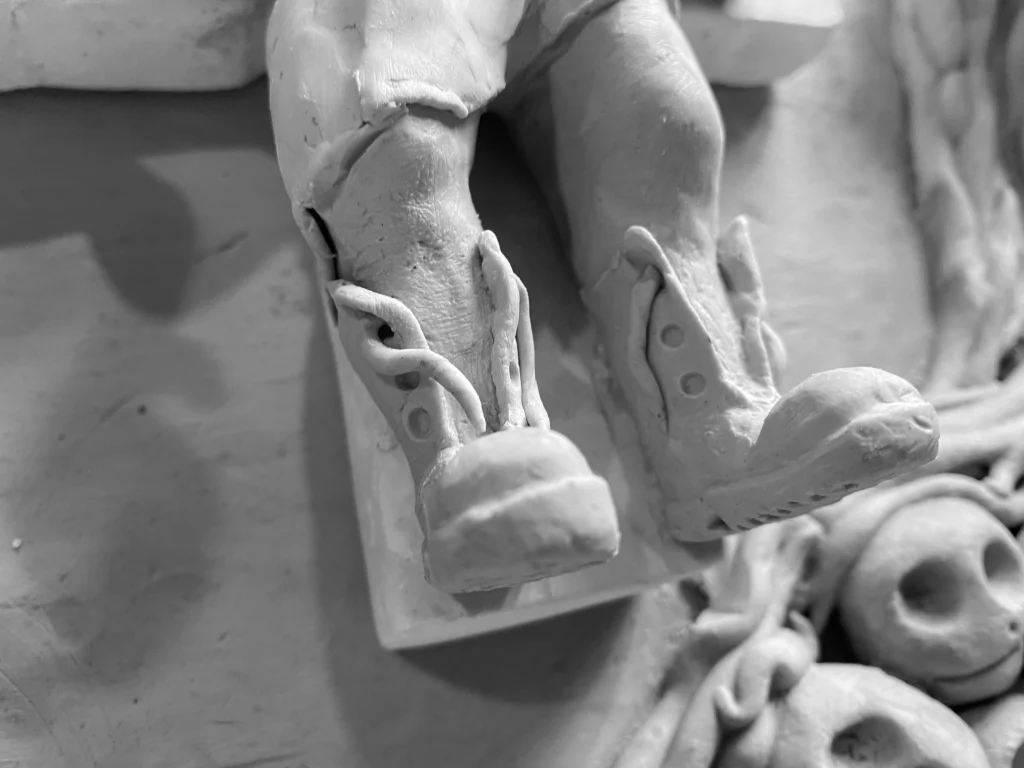
The figure on the right is a powerful, haunting depiction of death. With a skull-like face, like our Cruxials, flowing hair that transitions into a river of skulls, and an hourglass in hand, it symbolizes the inescapable equality that death brings. While the other figures appear active, this one calls for stillness and introspection. It reminds us that time is the ultimate judge and that death represents the ultimate form of justice, one that erases all differences and hierarchies. This figure also prompts reflection on life and the finiteness of our actions. In a world where time is limited, the responsibility to act justly becomes even more pressing. The skulls beneath the figure symbolize the consequences of injustice, serving as a poignant visual commentary on violence and the victims of inequality and abuse of power.
The arrangement of the three figures, [each created by one of us three sculptors] was deliberately chosen to create a narrative dynamic. Each figure represents an aspect of justice, [intervention, judgment, and transience] and together they form a complex, multidimensional story. The relief is not intended to provide easy answers but to encourage viewers to ask questions. The use of strong, sculptural forms and symbolic details underscores our intention to challenge the viewers’ emotional and intellectual responses. The figures interact with one another and with the space they occupy, creating a deeper connection between the work and the viewer. They invite contemplation not only of the depicted themes but also of one’s own responsibility toward justice.
“Three Justice” is not a comfortable work of art; it is a provocation, a challenge, a discourse. It forces us to confront the uncomfortable questions of justice: How is justice defined? Who has the right to enforce it? And what are the consequences when it is ignored? Our goal was to create a piece that is not only aesthetically striking but also intellectually and emotionally challenging. For us, art is not merely a means of self-expression but a dialogue with society, a way to express the inexpressible and inspire action. We hope that “Three Justice” encourages viewers to reflect on the role of power, responsibility, and transience in their own lives and on the significance of justice in an imperfect world.
A replica of this work made oit of ceramic is displayed above the entrance to our studio in Carrara.
Carrara 2022