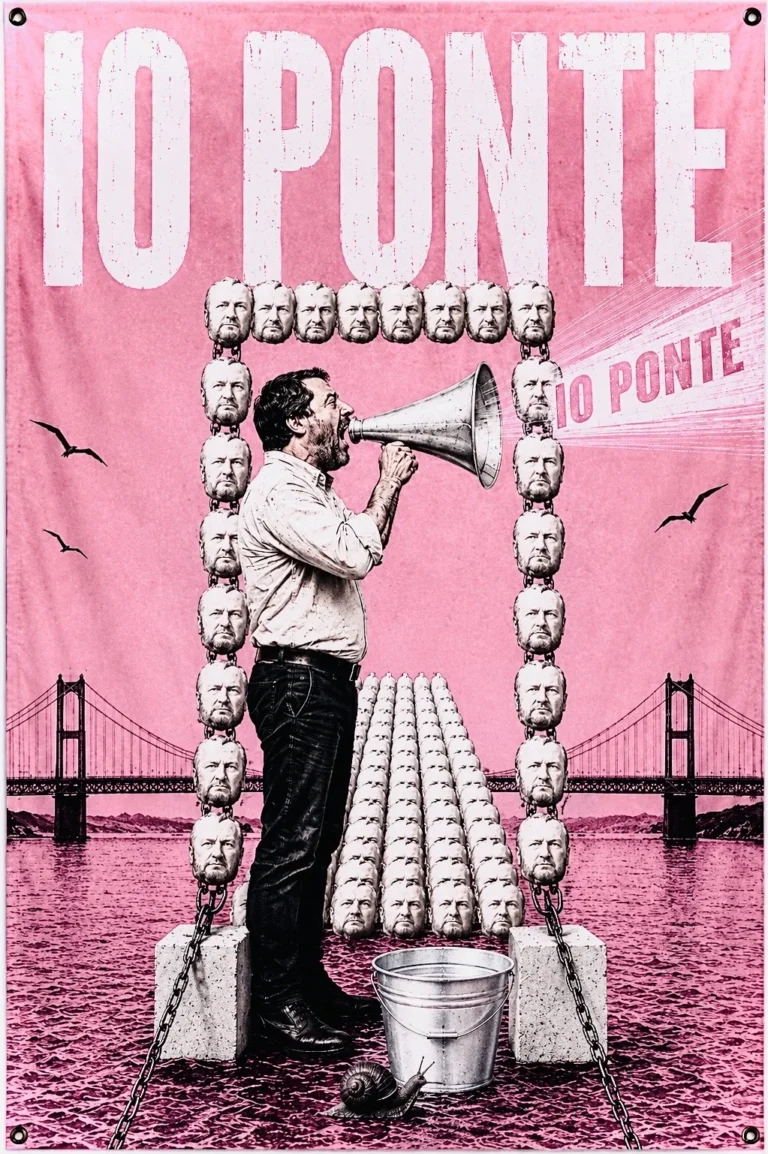
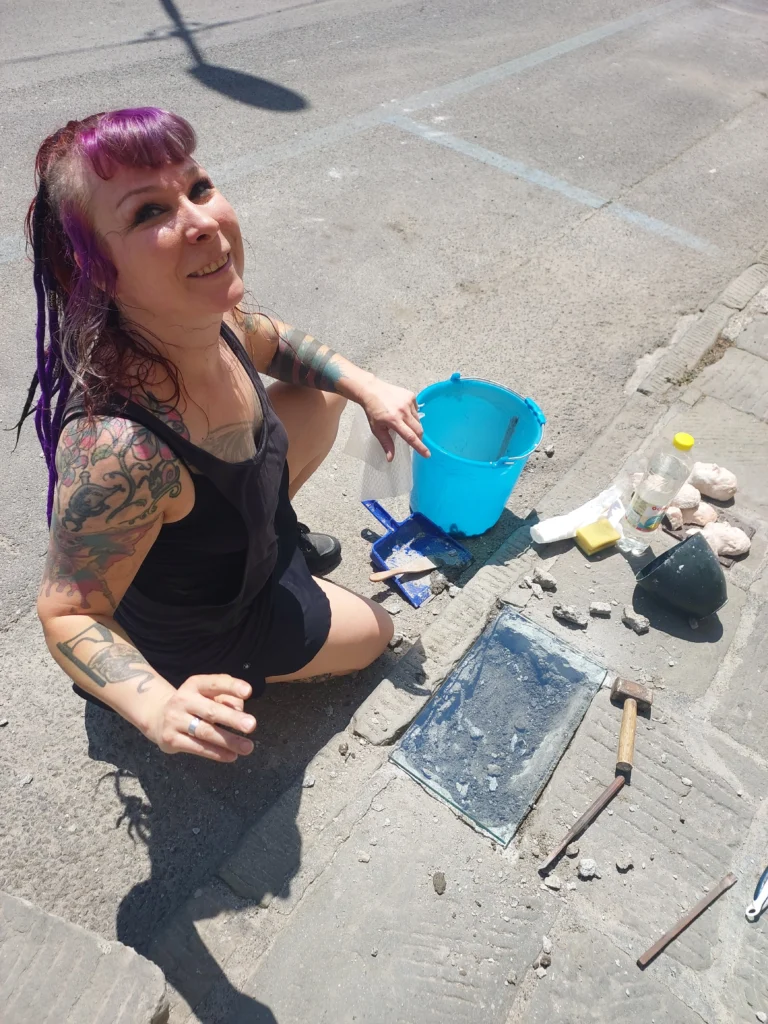
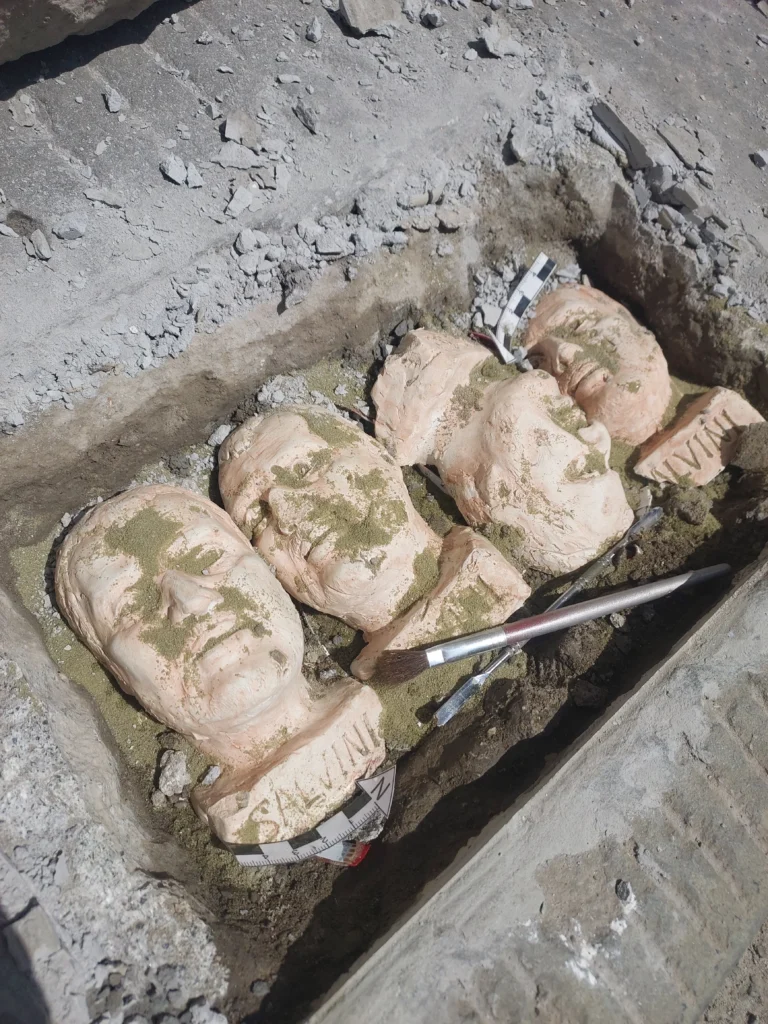
The story is set in a dystopian future, the year 3030. In this world, Earth is no longer shaped by its past but is overlaid by an advanced technological civilization that has literally built over the traces of earlier societies. Our narrative begins in Carrara, where students from the New Academy of Sciences uncover three marble busts during an archaeological dig in a former mining town. These busts bear the name “SALVINI” and are dated to the year 2029, a pivotal moment for the fictional past of the work.
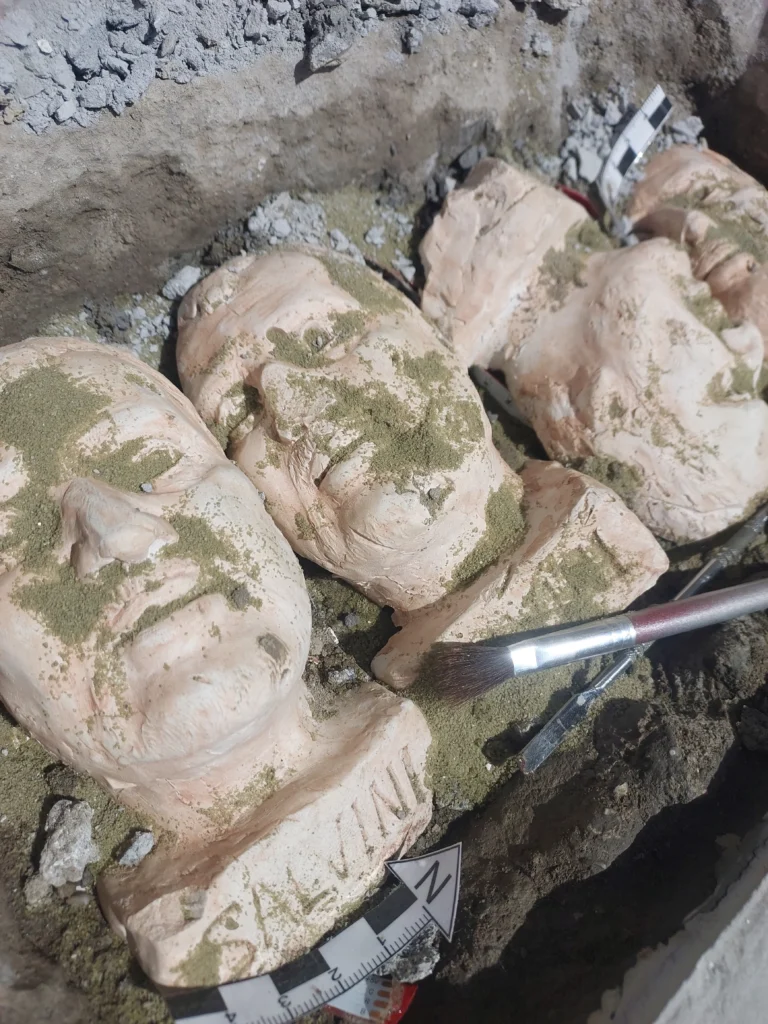
The staging and details of this discovery evoke real historical events, such as the removal of symbols of fallen regimes, inviting reflection on the cyclical nature of history and the relationship between collective identity and political memory. At the center of the narrative is the controversial figure Salvini, a hypothetical leader of the “SuperLega.” His personality cult, downfall, and subsequent erasure from history serve as a sharp critique of the populist and authoritarian currents shaping our present.
We sought to play with the idea that a seemingly mundane discovery, three small busts, could serve as a key to deciphering the complexity of history. These busts are not merely relics; they symbolize the attempt to preserve an ideology and a figure that, in the fictional timeline of SCAVI3030, was relegated to oblivion by the political collapse of Italy in 2029. We aimed to draw parallels between this fictional background and real historical processes, such as the removal of symbols from failed regimes, while also addressing the current challenges posed by populist and authoritarian movements.
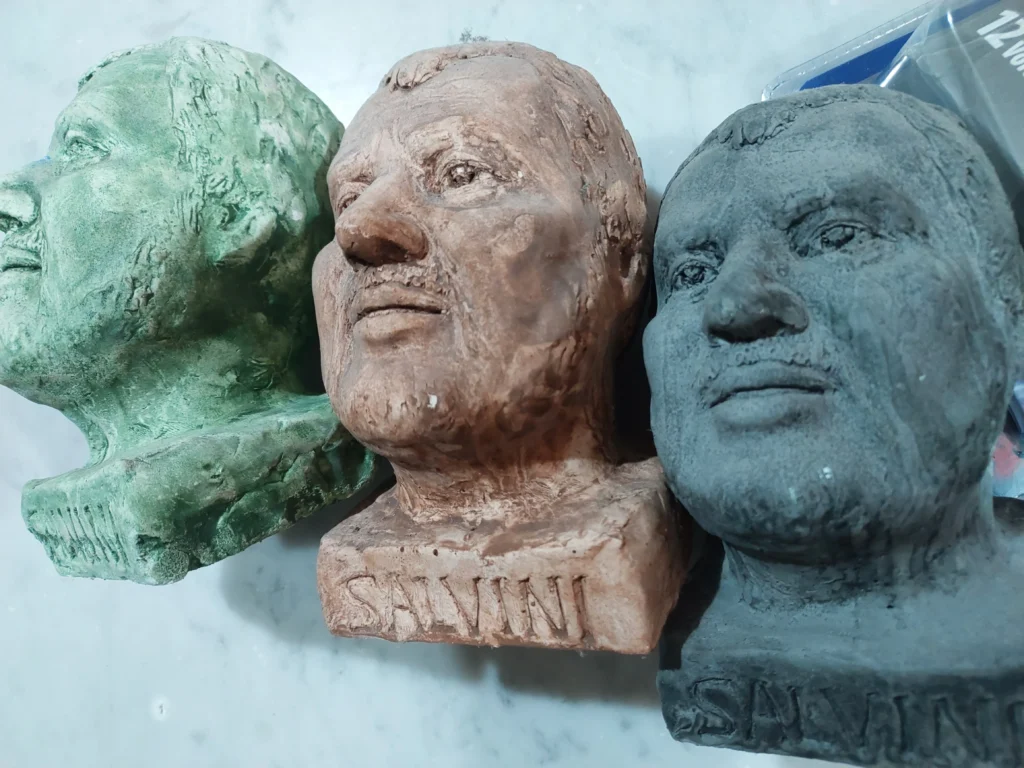
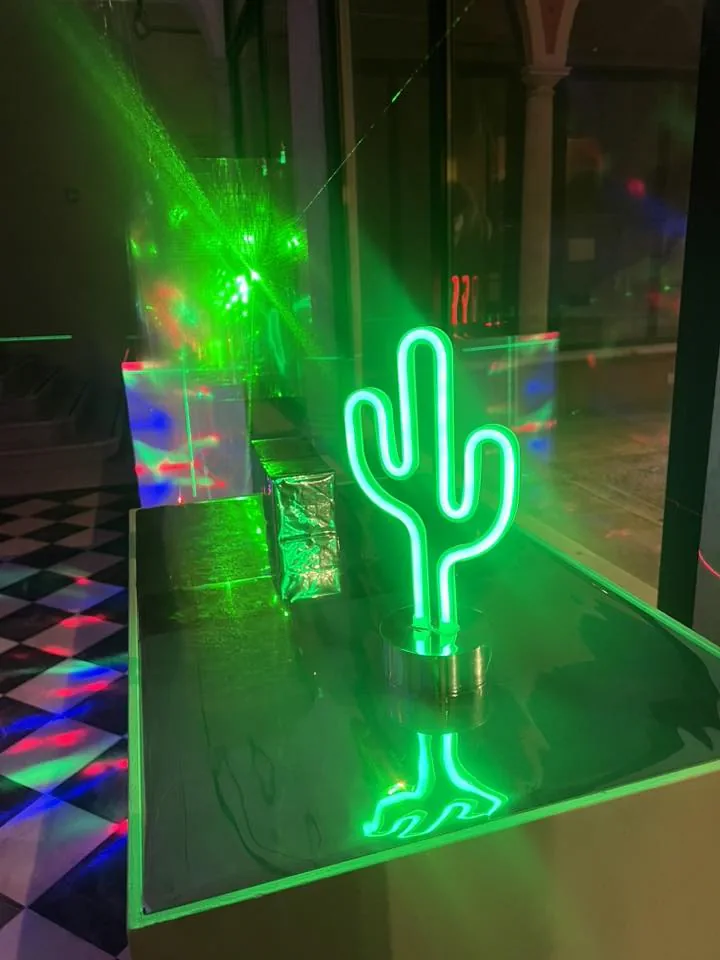
The final installation, titled “It Is Necessary to Prevent Evil”, is our attempt to distill the work’s significance in an ironic yet profound manner. The busts, displayed in various stages of decay, from burial to museum presentation, symbolize the ambivalence of power: it can be glorified but also quickly erodes. Through this deliberately provocative staging, we sought to encourage the audience to question the meaning and influence of symbols in history, without losing the sense of humor that we consider essential for making serious topics more accessible.
The choice of marble and ceramic was no coincidence. These materials, traditionally associated with permanence and classical art, serve here as a contrast to the transience and fragility of ideologies. The representation of the busts is intentionally imperfect, showing visible signs of wear and fragmentation, to visualize the processes of decay and remembrance.
With SCAVI3030, our intention is not to preach but to inspire. The idea of confronting an audience with an archaeological future that treats our present as a distant, almost mythical past creates a space for reflection. What remains of us when everything we now consider significant disappears into the dust of history? What responsibility do we bear as a society to preserve the lessons of the past while also critically examining them?
We see SCAVI3030 as an invitation: an invitation to rethink power structures, historical processes, and the role of art in preserving and interpreting history. For us, it is a statement not only aimed at art enthusiasts but at anyone willing to engage with the dynamics of history and the present.
We hope that SCAVI3030 not only provokes but also inspires. It is our contribution to a world where vigilance and critical thinking are not only demanded but celebrated.
Carrara 2024